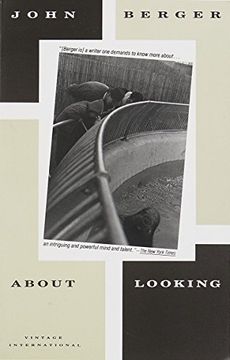
As a novelist, art critic, and cultural historian, Booker Prize-winning author John Berger is a writer of dazzling eloquence and arresting insight whose work amounts to a subtle, powerful critique of the canons of our civilization. In About Looking he explores our role as observers to reveal new layers of meaning in what we see. How do the animals we look at in zoos remind us of a relationship between man and beast all but lost in the twentieth century? What is it about looking at war photographs that doubles their already potent violence? How do the nudes of Rodin betray the threats to his authority and potency posed by clay and flesh? And how does solitude inform the art of Giacometti? In asking these and other questions, Berger quietly -- but fundamentally -- alters the vision of anyone who reads his work.
John Berger (Londres, 1926–París, 2017) fue escritor, crítico de arte, pintor y ensayista británico, una de las voces intelectuales más influyentes del siglo XX. Su obra desafió las fronteras entre literatura, crítica artística y reflexión política, siempre con especial atención a la manera en que vemos e interpretamos el mundo. Su novela G. obtuvo el Booker Prize en 1972, mientras que Ways of Seeing, surgida de la célebre serie televisiva de la BBC, transformó la manera de abordar el arte y la cultura visual. Vivió buena parte de su vida en Francia y mantuvo una relación estrecha con otros grandes intelectuales y artistas de su época.
To Tell a Story, publicado póstumamente en 2026, reúne materiales que documentan la extraordinaria amistad y colaboración intelectual entre Berger y Susan Sontag. Editado por Benoît Bourreau, el volumen recupera conversaciones, correspondencia y registros de encuentros entre ambos a lo largo de varias décadas, incluyendo el memorable debate televisivo que mantuvieron en 1983. Más que un simple libro sobre narrativa, es un diálogo entre dos formas de entenderla: Berger la concibe como una manera de preservar experiencias y vidas frente al olvido, mientras Sontag reivindica también su capacidad de inventar, transformar y abrir mundos posibles. El resultado permite asistir, casi como espectadores privilegiados, al intercambio entre dos mentes excepcionales.