你好! Tracked shipping to Taiwan with premium packaging for just NT$300 

Ship to
Taiwan
0
  • argentina
  • chile
  • colombia
  • españa
  • méxico
  • perú
  • estados unidos
  • internacional

Select your country

Americas

Europe

Rest of the world

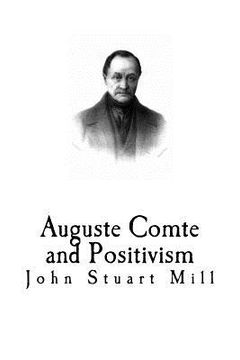
portada Auguste Comte and Positivism
Type
Physical Book
Publisher
Language
English
Pages
162
Format
Paperback
Dimensions
22.9 x 15.2 x 0.9 cm
Weight
0.23 kg.
ISBN13
9781979540711

Auguste Comte and Positivism

John Stuart Mill (Author) · Createspace · Paperback

Auguste Comte and Positivism - John Stuart Mill

New Book Imported to Taiwan
Delivery: 03 Sep - 14 Sep Shipping: 13 to 15 business days.
NT$ 580
NT$ 580

Synopsis "Auguste Comte and Positivism"

Auguste Comte and PositivismBy John Stuart MillIsidore Marie Auguste François Xavier Comte was a French philosopher who founded the discipline of praxeology and the doctrine of positivism. He is sometimes regarded as the first philosopher of science in the modern sense of the term.Influenced by the utopian socialist Henri Saint-Simon, Comte developed the positive philosophy in an attempt to remedy the social malaise of the French Revolution, calling for a new social doctrine based on the sciences. Comte was a major influence on 19th-century thought, influencing the work of social thinkers such as Karl Marx, John Stuart Mill, and George Eliot. His concept of sociologie and social evolutionism set the tone for early social theorists and anthropologists such as Harriet Martineau and Herbert Spencer, evolving into modern academic sociology presented by Emile Durkheim as practical and objective social research.
John Stuart Mill
  (Author)
View Author's Page
John Stuart Mill (1806-1873) was a British philosopher, economist, and politician, considered a key figure in liberalism and utilitarianism. Influenced by Jeremy Bentham and his father, James Mill, he wrote extensively on freedom, economy, and social justice. Among his most notable works are On Liberty (1859), where he defends individual rights against state control, and Utilitarianism (1863), where he develops this philosophical current.

His work also covered political economy with Principles of Political Economy (1848) and the philosophy of law with Representative Government (1861). Additionally, in The Subjection of Women (1869) he advocated for gender equality. His thinking continues to influence contemporary political philosophy and social theory.
See more
See less

Customers reviews

Frequently Asked Questions about the Book

All books in our catalog are Original.
The book is written in English.
The binding of this edition is Paperback.

Questions and Answers about the Book

Do you have a question about the book? Login to be able to add your own question.

Opinions about Bookdelivery

More customer reviews