你好! Shipping to Taiwan with premium packaging for just NT$300 

Ship to
Taiwan
0
  • argentina
  • chile
  • colombia
  • españa
  • méxico
  • perú
  • estados unidos
  • internacional

Select your country

Americas

Europe

Rest of the world

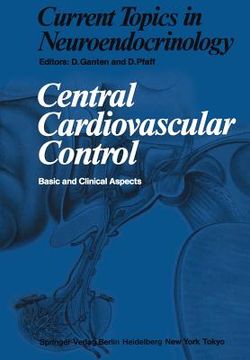
portada central cardiovascular control: basic and clinical aspects
Type
Physical Book
Illustrated by
Contributions by
Publisher
Year
2011
Language
English
Pages
192
Format
Paperback
Dimensions
24.4x17x1.1 cm
Weight
0.33 kg.
ISBN
3642684920
ISBN13
9783642684920

central cardiovascular control: basic and clinical aspects

D. Ganten (Illustrated by) · D. Pfaff (Illustrated by) · M. R. Brown (Contributions by) · Springer · Paperback

central cardiovascular control: basic and clinical aspects - Brown, M. R. ; Ganten, D. ; Pfaff, D.

Cheaper New Book Imported to Taiwan
Delivery: 15 Oct - 23 Oct Shipping: 16 to 17 business days.
NT$ 3,779
Faster New Book Imported to Taiwan
Delivery: 01 Oct - 09 Oct Shipping: 6 to 7 business days.
NT$ 4,611
NT$ 3,779

Synopsis "central cardiovascular control: basic and clinical aspects"

The most prominent function of the central nervous system is the control of motor functions by rapidly transmitted impulses through efferent cranial and spinal peripheral nerves. Besides electrically transmitted neural impulses, humoral mechanisms with more sustained actions are exercised by the brain and spinal cord to regulate body homeostasis. Thus, the brain may be regarded as an "endocrine gland" discharging neurohormones (peptides) either into the general circulation (neurohypophyseal hormones) or into the hypothalamo-adenohypophyseal portal circulation (releasing and inhibiting hormones). The brain, therefore, which is protected by the blood-brain barrier from disturbing and potentially noxious exogenous and endogenous agents circulating in the blood, has to have certain neurohemal regions beyond this barrier, such as the neural lobe and the median eminence (infundibulum), where neurohor- mones have free access to the blood stream. To regulate somatic and autonomic functions in the best possible way, the central nervous system is highly dependent on feedback signals conveyed through somatic and visceral afferent nerves as well as on peripheral humoral signals such as peripheral hormones and other circulating substances that are under homeostatic regulation, e. g., peptides, arnines, electrolytes, and other biologically active agents. In this chapter, the role of the blood-brain barrier in the regulation of these sub- stances will be discussed with special emphasis on the access through the blood-brain barrier to cardiovascular centers. 2 The Blood-Brain Barrier 2.

Customers reviews

Frequently Asked Questions about the Book

All books in our catalog are Original.
The book is written in English.
The binding of this edition is Paperback.

Questions and Answers about the Book

Do you have a question about the book? Login to be able to add your own question.

Opinions about Bookdelivery

More customer reviews