你好! Shipping to Taiwan with premium packaging for just NT$300 

Ship to
Taiwan
0
  • argentina
  • chile
  • colombia
  • españa
  • méxico
  • perú
  • estados unidos
  • internacional

Select your country

Americas

Europe

Rest of the world

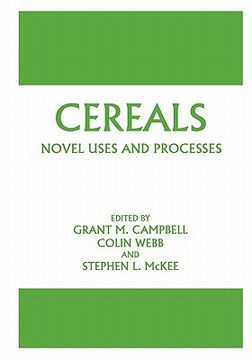
portada cereals: novel uses and processes
Type
Physical Book
Publisher
Year
2010
Language
English
Pages
290
Format
Paperback
Dimensions
25.4x17.8x1.7 cm
Weight
0.54 kg.
ISBN
1441932747
ISBN13
9781441932747

cereals: novel uses and processes

Grant M. Campbell (Illustrated by) · Colin Webb (Illustrated by) · Stephen L. McKee (Illustrated by) · Springer · Paperback

cereals: novel uses and processes - Campbell, Grant M. ; Webb, Colin ; McKee, Stephen L.

Cheaper New Book Imported to Taiwan
Delivery: 16 Nov - 27 Nov Shipping: 14 to 18 business days.
NT$ 5,018
Faster New Book Imported to Taiwan
Delivery: 03 Nov - 11 Nov Shipping: 5 to 6 business days.
NT$ 6,534
NT$ 5,018

Synopsis "cereals: novel uses and processes"

"So long as a person is capable of self renewal they are a living being. " -Amiel Cereals have been the source of life to the human race, providing nutritional and ma- terial needs since the dawn of civilization. As with all dynamic industries, the Cereal in- dustry has renewed itself in the past; as the millennium approaches, it is on the brink of another renewal, in which the versatility and providence of cereals are being rediscovered, but in new and exciting ways. Cereals are richly diverse; over 10,000 varieties convert minerals and the energy of the sun into a bursting catalog of functional and versatile biomolecules and biopolymers. Processing technology allows these components to be accessed, separated, isolated and purified, while chemical science allows modification for even greater diversity and speci- ficity. The last century has seen the move from cereal- to oil-based chemical and materials industries. But cereals contain a greater variety and functionality of macromolecules than oil. Starch, protein, bran and straw, already diverse across cereal varieties, can be fraction- ated into more specific elements, modified chemically to enhance function, or used as feedstocks in fermentation-based bioconversion systems, to produce a range of bulk and fine chemicals for industries as diverse as food, pharmaceuticals, plastics, textiles, pulp and paper, transport, composites and boards, adhesives and energy.

Customers reviews

Frequently Asked Questions about the Book

All books in our catalog are Original.
The book is written in English.
The binding of this edition is Paperback.

Questions and Answers about the Book

Do you have a question about the book? Login to be able to add your own question.

Opinions about Bookdelivery

More customer reviews