你好! Shipping to Taiwan with premium packaging for just NT$300 

Ship to
Taiwan
0
  • argentina
  • chile
  • colombia
  • españa
  • méxico
  • perú
  • estados unidos
  • internacional

Select your country

Americas

Europe

Rest of the world

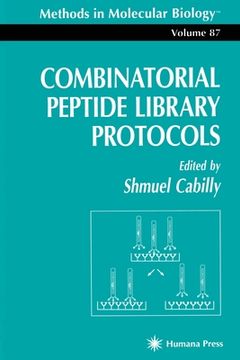
portada combinatorial peptide library protocols
Type
Physical Book
Illustrated by
Publisher
Year
2010
Language
English
Pages
313
Format
Paperback
Dimensions
22.9x15.2x1.8 cm
Weight
0.44 kg.
ISBN
1617370223
ISBN13
9781617370229

combinatorial peptide library protocols

Shmuel Cabilly (Illustrated by) · Humana · Paperback

combinatorial peptide library protocols - Cabilly, Shmuel

Cheaper New Book Imported to Taiwan
Delivery: 06 Oct - 19 Oct Shipping: 13 to 17 business days.
NT$ 3,360
Faster New Book Imported to Taiwan
Delivery: 24 Sep - 02 Oct Shipping: 5 to 6 business days.
NT$ 5,921
NT$ 3,360

Synopsis "combinatorial peptide library protocols"

During the course of evolution, an imbalance was created between the rate of vertebrate genetic adaptation and that of the lower forms of living organisms, such as bacteria and viruses. This imbalance has given the latter the advantage of generating, relatively quickly, molecules with unexpected structures and features that carry a threat to vertebrates. To compensate for their weakness, vertebrates have accelerated their own evolutionary processes, not at the level of whole organism, but in specialized cells containing the genes that code for antibody molecules or for T-cell receptors. That is, when an immediate requirement for molecules capable of specific interactions arose, nature has preferred to speed up the mode of Darwinian evolution in pref- ence to any other approach (such as the use of X-ray diffraction studies and computergraphic analysis). Recently, Darwinian rules have been adapted for test tube research, and the concept of selecting molecules having particular characteristics from r- dom pools has been realized in the form of various chemical and biological combinatorial libraries. While working with these libraries, we noticed the interesting fact that when combinatorial libraries of oligopeptides were allowed to interact with different selector proteins, only the actual binding sites of these proteins showed binding properties, whereas the rest of the p- tein surface seemed "inert. " This seemingly common feature of protein- having no extra potential binding sites--was probably selected during evolution in order to minimize nonspecific interactions with the surrounding milieu.

Customers reviews

Frequently Asked Questions about the Book

All books in our catalog are Original.
The book is written in English.
The binding of this edition is Paperback.

Questions and Answers about the Book

Do you have a question about the book? Login to be able to add your own question.

Opinions about Bookdelivery

More customer reviews