你好! Shipping to Taiwan with premium packaging for just NT$300 

Ship to
Taiwan
0
  • argentina
  • chile
  • colombia
  • españa
  • méxico
  • perú
  • estados unidos
  • internacional

Select your country

Americas

Europe

Rest of the world

portada Jung on Alchemy
Type
Physical Book
Year
1995
Language
English
Pages
228
Format
Paperback
Dimensions
22.9x14.8x1.8 cm
Weight
0.37 kg.
ISBN13
9780691010977

Jung on Alchemy

Carl Gustav Jung (Author) · Nathan Schwartz-Salant (Illustrated by) · Princeton University Press · Paperback

Jung on Alchemy - Carl Gustav Jung

Cheaper New Book Imported to Taiwan
Delivery: 12 Nov - 25 Nov Shipping: 12 to 16 business days.
NT$ 1,177
Faster New Book Imported to Taiwan
Delivery: 13 Nov - 23 Nov Shipping: 13 to 14 business days.
NT$ 1,689
NT$ 1,177

Synopsis "Jung on Alchemy"

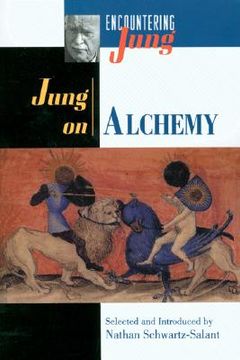
The ancient practice of alchemy, which thrived in Europe until the seventeenth century, dealt with the phenomenon of transformation--not only of materials (ore into gold) but also of the human spirit (self into Other). Through their work in the material realm, alchemists discovered personal rebirth as well as a linking between outer and inner dimensions. C. G. Jung first turned to alchemy for personal illumination in coping with trauma brought on by his break with Freud. Alchemical symbolism eventually suggested to Jung that there was a process in the unconscious, one that had a goal beyond discharging tension and hiding pain. In this book, Nathan Schwartz-Salant, a leading Jungian analyst with an interest in alchemy, brings together a key selection of Jung's writings on the subject. These writings expose us to Jung's fascinating reflections on the symbols of alchemy--such as the three-headed Mercurial dragon, hermaphrodites, and lions devouring the sun--and brings us closer to the spirit of his approach to the unconscious, closer than his purely scientific concepts often allow.
Carl Gustav Jung
  (Author)
View Author's Page
Carl Gustav Jung was born in July 1875 in Kesswil, Switzerland, into a very religious family. He was a withdrawn and lonely child, who spent much of his childhood unable to relate to brothers or sisters. Partly because of this, he used to play with elements of nature and used his imagination to weave extravagant narrative lines about everything he experienced.

However, the unusual mental associations and the symbolism that populated young Jung's mind did not limit their reign to the hours he was awake. Jung began very early to have very vivid dreams with a strong symbolic charge. And, as expected from someone who dedicated a large part of his career to studying dreams, at least one of these dreams marked him for life.
See more
See less

Customers reviews

Frequently Asked Questions about the Book

All books in our catalog are Original.
The book is written in English.
The binding of this edition is Paperback.

Questions and Answers about the Book

Do you have a question about the book? Login to be able to add your own question.

Opinions about Bookdelivery

More customer reviews