你好! Shipping to Taiwan with premium packaging for just NT$300 

Ship to
Taiwan
0
  • argentina
  • chile
  • colombia
  • españa
  • méxico
  • perú
  • estados unidos
  • internacional

Select your country

Americas

Europe

Rest of the world

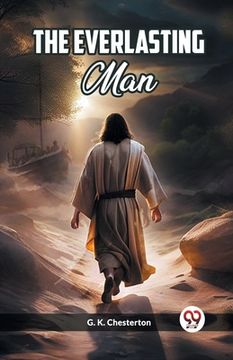
portada The Everlasting Man
Type
Physical Book
Publisher
Language
English
Pages
218
Format
Paperback
Dimensions
21.6x14x1.3 cm
Weight
0.28 kg.
ISBN13
9789361426896

The Everlasting Man

G. K. Chesterton (Author) · Double 9 Books · Paperback

The Everlasting Man - G. K. Chesterton

New Book Imported to Taiwan
Delivery: 25 Sep - 05 Oct Shipping: 1 to 2 business days.
NT$ 675
NT$ 675

Synopsis "The Everlasting Man"

G. K. Chesterton wrote "The Everlasting Man" as a Christian apologetics work. It is a rebuttal to H. G. Wells' "The Outline of History," which questions Wells' representations of human life, civilization, and Jesus Christ. Chesterton's work depicts humanity's spiritual path, with a concentration on Western civilization. The work is divided into two halves, "On the Creature Called Man" and "On the Man Called Christ." In the first section, Chesterton contends that humans are fundamentally different from other creatures. In the second half, he argues that Jesus and Christianity go beyond mere human leadership and religion, emphasizing their miraculous and unusual nature. C. S. Lewis commended "The Everlasting Man" with influencing his intellectual conversion to Christianity, calling it the best popular argument he knew. The book had a tremendous impact on Christian theology and apologetics, offering a persuasive case for Christianity's long-term significance and uniqueness in the face of modern skepticism.
G. K. Chesterton
  (Author)
View Author's Page
G. K. Chesterton (London, May 29, 1874 – Beaconsfield, June 14, 1936) was a prolific British writer, author of essays, novels, poetry, biographies, and Christian apologetics. His work is characterized by irony, paradoxical wit, and a critical view of modernity. He was a prominent convert to Catholicism and an influential figure in religious and literary thought of his time. He is also known for his brilliant argumentative style and his defense of common sense.

Among his most recognized works are The Man Who Was Thursday (1908), Orthodoxy (1908), The Innocence of Father Brown (1911), Heretics (1905), The Ball and the Cross (1909), and The Resurrection of Rome (1930). He cultivated the essay, the novel of ideas, detective stories, and social and religious criticism.
See more
See less

Customers reviews

Frequently Asked Questions about the Book

All books in our catalog are Original.
The book is written in English.
The binding of this edition is Paperback.

Questions and Answers about the Book

Do you have a question about the book? Login to be able to add your own question.

Opinions about Bookdelivery

More customer reviews