你好! Shipping to Taiwan with premium packaging for just NT$300 

Ship to
Taiwan
0
  • argentina
  • chile
  • colombia
  • españa
  • méxico
  • perú
  • estados unidos
  • internacional

Select your country

Americas

Europe

Rest of the world

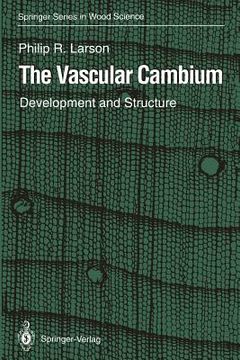
portada the vascular cambium: development and structure
Type
Physical Book
Publisher
Year
2011
Language
English
Pages
725
Format
Paperback
Dimensions
23.4x15.6x3.8 cm
Weight
1.03 kg.
ISBN
3642784682
ISBN13
9783642784682

the vascular cambium: development and structure

Philip R. Larson (Author) · Springer · Paperback

the vascular cambium: development and structure - Larson, Philip R.

Cheaper New Book Imported to Taiwan
Delivery: 08 Oct - 21 Oct Shipping: 12 to 16 business days.
NT$ 5,520
Faster New Book Imported to Taiwan
Delivery: 29 Sep - 07 Oct Shipping: 5 to 6 business days.
NT$ 6,584
NT$ 5,520

Synopsis "the vascular cambium: development and structure"

The cambium has been variously defined as follows: "The actively dividing layer of cells that lies between, and gives rise to, secondary xylem and phloem (vascular cambium)" (IAWA 1964); "A meristem with products of periclinal divisions commonly contributed in two directions and arranged in radial files. Term pre- ferably applied only to the two lateral meristems, the vascular cambium and cork cambium, or phellogen" (Esau 1977); and, "Lateral meristem in vascular plants which produces secondary xylem, secondary phloem, and parenchyma, usually in radial rows; it consists of one layer of initials and their undifferentiated deriva- tives" (Little and Jones 1980). Clearly, the cambium is a diverse and extensive meristem, and no one defini- tion will encompass all manifestations of what anatomists consider cambium. Its diversity and extent are further exemplified by a single plant, such as a temperate- zone tree, in which procambium is initiated in the embryo and perpetuated throughout every lateral, primary meristem before giving rise to cambium in the secondary body. The cambium thereafter performs its meristematic task of producing daughter cells that differentiate to specialized tissue systems. The cam- bium, however, does not remain static. Its derivatives vary either in form, or TImc- tion, or rate of production at different positions on the tree, with age of the tree, and with season of the year. Moreover, the cambium responds both to internal sig- nals and to external stimuli such as environment or wounding.

Customers reviews

Frequently Asked Questions about the Book

All books in our catalog are Original.
The book is written in English.
The binding of this edition is Paperback.

Questions and Answers about the Book

Do you have a question about the book? Login to be able to add your own question.

Opinions about Bookdelivery

More customer reviews