你好! Shipping to Taiwan with premium packaging for just NT$300 

Ship to
Taiwan
0
  • argentina
  • chile
  • colombia
  • españa
  • méxico
  • perú
  • estados unidos
  • internacional

Select your country

Americas

Europe

Rest of the world

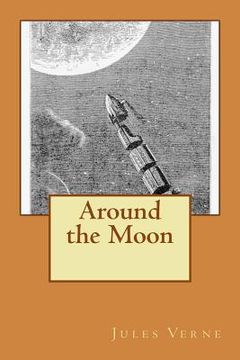
portada Around the Moon
Type
Physical Book
Publisher
Language
English
Pages
390
Format
Paperback
Dimensions
22.9x15.2x2 cm
Weight
0.52 kg.
ISBN13
9781517355371

Around the Moon

Jules Verne (Author) · Createspace · Paperback

Around the Moon - Ballin, G-Ph ; Verne, Jules

New Book Imported to Taiwan
Delivery: 20 Oct - 02 Nov Shipping: 16 to 20 business days.
NT$ 1,234
NT$ 1,234

Synopsis "Around the Moon"

Around the Moon (French: Autour de la Lune, 1870), Jules Verne's sequel to From the Earth to the Moon, is a science fiction novel continuing the trip to the moon which left the reader in suspense after the previous novel. It was later combined with From the Earth to the Moon to create A Trip to the Moon and Around It. Plot Having been fired out of the giant Columbiad space gun, the Baltimore Gun Club's bullet-shaped projectile, along with its three passengers, Barbicane, Nicholl and Michel Ardan, begins the five-day trip to the moon. A few minutes into the journey, a small, bright asteroid passes within a few hundred yards of them, but luckily does not collide with the projectile. The asteroid had been captured by the Earth's gravity and had become a second moon. An illustration from Jules Verne's novel "Around the Moon" drawn by Émile-Antoine Bayard and Alphonse de Neuville, September 16, 1872 The three travelers undergo a series of adventures and misadventures during the rest of the journey, including disposing of the body of a dog out a window, suffering intoxication by gases, and making calculations leading them, briefly, to believe that they are to fall back to Earth. During the latter part of the voyage, it becomes apparent that the gravitational force of their earlier encounter with the asteroid has caused the projectile to deviate from its course. The projectile enters lunar orbit, rather than landing on the moon as originally planned. Barbicane, Ardan and Nicholl begin geographical observations with opera glasses. The projectile then dips over the northern hemisphere of the moon, into the darkness of its shadow. It is plunged into extreme cold, before emerging into the light and heat again. They then begin to approach the moon's southern hemisphere. From the safety of their projectile, they gain spectacular views of Tycho, one of the greatest of all craters on the moon. The three men discuss the possibility of life on the moon, and conclude that it is barren. The projectile begins to move away from the moon, towards the 'dead point' (the place at which the gravitational attraction of the moon and Earth becomes equal). Michel Ardan hits upon the idea of using the rockets fixed to the bottom of the projectile (which they were originally going to use to deaden the shock of landing) to propel the projectile towards the moon and hopefully cause it to fall onto it, thereby achieving their mission. When the projectile reaches the point of neutral attraction, the rockets are fired, but it is too late. The projectile begins a fall onto the Earth from a distance of 160,000 miles, and it is to strike the Earth at a speed of 115,200 miles per hour, the same speed at which it left the mouth of the Columbiad. All hope seems lost for Barbicane, Nicholl and Ardan. Four days later, the crew of a US Navy vessel USS Susquehanna spots a bright meteor fall from the sky into the sea. This turns out to be the returning projectile, and the three men inside are found to be alive and are rescued. They are treated to lavish homecoming celebrations as the first people to leave Earth.
Jules Verne
  (Author)
View Author's Page
Jules Gabriel Verne, (Nantes, February 8, 1828-Amiens, March 24, 1905), a prominent French writer and pioneer of adventure and science fiction literature, is recognized for his visionary novels, where he combined scientific rigor with thrilling narrative. Works such as Twenty Thousand Leagues Under the Sea, Journey to the Center of the Earth, and Around the World in Eighty Days not only entertain but also anticipated technological advances with astonishing accuracy.

A member of the Legion of Honor and one of the most translated authors in history, Verne influenced generations of readers, scientists, and writers. His stories, meticulously documented, remain a benchmark of universal literature, ideal for those seeking classics filled with imagination, adventure, and knowledge.
See more
See less

Customers reviews

Frequently Asked Questions about the Book

All books in our catalog are Original.
The book is written in English.
The binding of this edition is Paperback.

Questions and Answers about the Book

Do you have a question about the book? Login to be able to add your own question.

Opinions about Bookdelivery

More customer reviews