你好! Shipping to Taiwan with premium packaging for just NT$300 

Ship to
Taiwan
0
  • argentina
  • chile
  • colombia
  • españa
  • méxico
  • perú
  • estados unidos
  • internacional

Select your country

Americas

Europe

Rest of the world

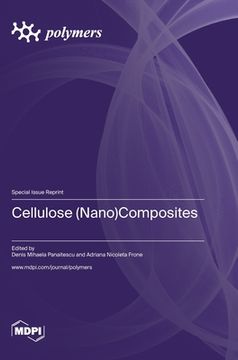
portada Cellulose (Nano)Composites
Type
Physical Book
Publisher
Language
English
Pages
248
Format
Hardcover
Dimensions
24.4x17x2.1 cm
Weight
0.73 kg.
ISBN13
9783036579498

Cellulose (Nano)Composites

Panaitescu, Denis Mihaela ; Frone, Adriana Nicoleta (Author) · Mdpi AG · Hardcover

Cellulose (Nano)Composites - Panaitescu, Denis Mihaela ; Frone, Adriana Nicoleta

Cheaper New Book Imported to Taiwan
Delivery: 19 Oct - 30 Oct Shipping: 16 to 20 business days.
NT$ 2,486
Faster New Book Imported to Taiwan
Delivery: 02 Oct - 12 Oct Shipping: 5 to 6 business days.
NT$ 2,644
NT$ 2,486

Synopsis "Cellulose (Nano)Composites"

Our environment has been severely affected by the intensive production and use of plastics derived from fossil fuels and their uncontrolled end-of-life disposal. The return to using natural products is a characteristic of the most recent decades, and nanocellulose occupies a privileged position among these intensively studied products. Nanocellulose is obtained from cellulose, which is the most abundant natural polymer, by applying different chemical, mechanical, enzymatic and, most often, combined methods. A huge effort has been invested in the application of nanocellulose as a modifier or reinforcing agent in polymer nanocomposites. This Special Issue brings together twelve original articles and studies that contribute to our understanding of the fundamental and technological knowledge of cellulose-polymer nanocomposites. The isolation of nanocellulose from cheap sources and, especially, from agro-food industry waste is an important step to be implemented for cost reduction and environmental protection. An appropriate surface treatment of nanocellulose is a key element for achieving a good interfacial adhesion and superior properties in polymer nanocomposites. The use of more appropriate and green solvent systems for cellulose, the use of biobased plasticizers and toughening agents in nanocellulose nanocomposites, and the use of molecular dynamics simulations for the prediction of the compatibility of cellulose blends are valuable methods for expanding the application of nanocellulose.

Customers reviews

Frequently Asked Questions about the Book

All books in our catalog are Original.
The book is written in English.
The binding of this edition is Hardcover.

Questions and Answers about the Book

Do you have a question about the book? Login to be able to add your own question.

Opinions about Bookdelivery

More customer reviews