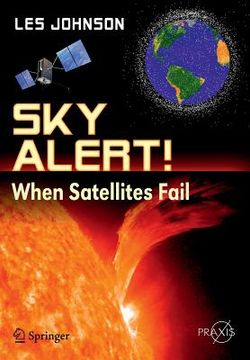
"Sky Alert! What Happens When Satellites Fail" explores for the first time what our modern world would be like if we were suddenly to lose most, if not all, of our space assets. The author demonstrates humankind's dependence on space satellites and show what might happen to various aspects of our economy, defense, and daily lives if they were suddenly destroyed. The book opens with a consideration of how our space assets might be lost in the first place: through orbital debris, war, and solar storms. The author then looks at what would happen if our satellites were lost, including the effect on weather forecasting, and the Global Positioning System, explaining GPS in detail and its importance to the military, including spy satellites and military reconnaissance, commerce, civilians, communications and remote sensing - both resource monitoring and locating and environmental monitoring and science. The effects of losing such assets as the International Space Station as well as such research satellites as the Hubble Space Telescope or the Chandra X-Ray Observatory are also considered. Part III of the book looks at how we can protect our satellites, preparing for the worst, reducing the growth and amount of orbital debris, preventing acts of war in space and hardening against space radiation. The book ends on an optimistic note: most spacefaring nations are now working together to develop new technologies to reduce the threat posed by orbital debris and in-space nuclear detonations and treaties exist to limit the development and use of weapons in space. Finally, it is hoped that it will not be long before we will be able to better predict and take precautions against solar storms. The global economy has now become so dependent upon satellites that their loss would be devastating - to the economy, to national security, and potentially, to the day-to-day survival of those who live in the world's most advanced economies.