你好! Shipping to Taiwan with premium packaging for just NT$300 

Ship to
Taiwan
0
  • argentina
  • chile
  • colombia
  • españa
  • méxico
  • perú
  • estados unidos
  • internacional

Select your country

Americas

Europe

Rest of the world

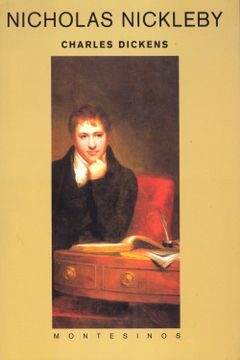
portada Nicholas Nickleby (in Spanish)
Type
Physical Book
Publisher
Year
1993
Language
Spanish
Pages
648
Format
Paperback
ISBN
8496356124
ISBN13
9788496356122
Edited in
España

Nicholas Nickleby (in Spanish)

Charles Dickens (Author) · Montesinos · Paperback

Nicholas Nickleby (in Spanish) - Charles Dickens

New Book Imported to Taiwan
Delivery: 12 Oct - 29 Oct Shipping: 14 to 22 business days.
NT$ 1,553
NT$ 1,553

Synopsis "Nicholas Nickleby (in Spanish)"

Cuentan que la pequeña Harriet Thackeray, hija del novelista in­glés Wiliam Thackeray, le preguntaba a su padre con conster­nación: "Papá, ¿por qué tú no escribes libros como NICHOLAS NICKLEBY?" Y es que, como apuntaba uno de los más importantes críticos de su época, Walter Bagehot, "no hay ningún escritor inglés contemporáneo cuyas obras sean leídas con tanto deleite por toda la casa, criados y señores, niños y adultos". Esta obser­vación se ajusta estupendamente a NICHOLAS NICKLEBY, una de esas largas novelas por entregas que los lectores de Dickens esperaban con tanta avidez. Con avidez semejante pero sin íncó­modas interrupciones podrá ahora disfrutar el lector contempo­ráneo de las aventuras y desventuras de Nicholas. La novela es, en primer lugar, un feroz ataque satírico contra las escuelas de Yorkshire de la época, donde los menores recibían un trato brutal por parte de individuos avariciosos y crueles, que habiendo demostrado su absoluta incompetencia en todo tipo de oficios y negocios sólo tenían como último recurso hacerse maes­tros. Es posible que el lector contemporáneo halle exagerada la descripción del Sr Squeers y de su escuela. No obstante, asegu­ra el autor que es tan sólo el pálido retrato de una realidad suavi­zada a propósito para no ser tomada por imposible. Pero no es es esta una novela amarga. Junto a la vileza y mez­quindad de algunos personajes, hay otros cuya generosidad y nobleza resultan tan irreales como los vicios de aquéllos. Y es que, en las novelas de Dickens, el humor que magníficamente im­pregna todas las páginas aun cuando se relatan los más tristes episodios, y el amor siempre triunfante por encima de cualquier mal designio, de cualquier circunstancia adversa o voluntad malé­vola, parecen estar ahí para recordarnos que la lectura, como la vida, debería tener siempre un final feliz, contra todo pronóstico.
Charles Dickens
  (Author)
View Author's Page
Charles Dickens (February 7, 1812 - June 9, 1870) was born in Portsmouth and was the eldest son of a Royal Navy clerk. At twelve, his father's imprisonment for debt forced him to work in a blacking factory. His education was sporadic: he taught himself shorthand, worked as a clerk in a law office, and eventually became a parliamentary correspondent for the Morning Chronicle.

Coming from a humble family, "good old Charles" did not receive formal education until he was nine, and was heavily criticized by the critics of the time for being too self-taught. His life took an unexpected turn with his father's imprisonment for debts, moving his family to live with him in jail, allowed at that time by British laws. At the age of 12, he was already considered fit to start working in a dye factory. Although his family's situation had improved, his mother insisted he keep working there, inspiring him to write one of his masterpieces, David Copperfield.

His articles, later collected in Scenes from London Life by "Boz" (1836-1837), were very successful, and with the appearance in 1837 of The Posthumous Papers of the Pickwick Club, Dickens became a true publishing phenomenon. Novels such as Oliver Twist (1837-1839), Nicholas Nickleby (1838-1839), and Barnaby Rudge (1841) gained enormous popularity, as did some travel chronicles, such as Pictures from Italy (1846). With Dombey and Son (1846-1848) he began his mature period, of which good examples are David Copperfield (1849-1850), his first novel in the first person and his favorite, in which he developed some autobiographical episodes; Bleak House (1852-1853); Little Dorrit (1855-1857), A Tale of Two Cities (1859), Great Expectations (1860-1861), and Our Mutual Friend (1864-1865). He died at Gad's Hill, his country house in Higham, in the county of Kent.
See more
See less

Customers reviews

Frequently Asked Questions about the Book

All books in our catalog are Original.
The book is written in Spanish.
The binding of this edition is Paperback.

Questions and Answers about the Book

Do you have a question about the book? Login to be able to add your own question.

Opinions about Bookdelivery

More customer reviews