Tracked shipping to Taiwan with premium packaging for just NT$300 

Ship to
Taiwan
0
  • argentina
  • chile
  • colombia
  • españa
  • méxico
  • perú
  • estados unidos
  • internacional

Select your country

Americas

Europe

Rest of the world

portada Applied Digital Logic Exercises Using FPGAs
Type
Physical Book
Language
English
Pages
168
Format
Hardcover
Dimensions
25.4 x 17.8 x 1.1 cm
Weight
0.51 kg.
ISBN13
9781643278513

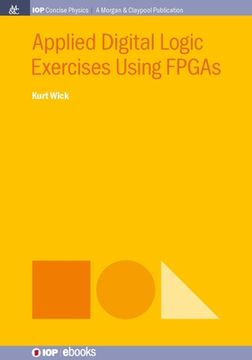
Applied Digital Logic Exercises Using FPGAs

Kurt Wick (Author) · Iop Concise Physics · Hardcover

Applied Digital Logic Exercises Using FPGAs - Wick, Kurt

Cheaper New Book Imported to Taiwan
Delivery: 31 Jul - 13 Aug Shipping: 17 to 21 business days.
NT$ 5,259
Faster New Book Imported to Taiwan
Delivery: 15 Jul - 23 Jul Shipping: 5 to 6 business days.
NT$ 5,534
NT$ 5,259

Synopsis "Applied Digital Logic Exercises Using FPGAs"

FPGAs have almost entirely replaced the traditional Application Specific Standard Parts (ASSP) such as the 74xx logic chip families because of their superior size, versatility, and speed. For example, FPGAs provide over a million fold increase in gates compared to ASSP parts. The traditional approach for hands-on exercises has relied on ASSP parts, primarily because of their simplicity and ease of use for the novice. Not only is this approach technically outdated, but it also severely limits the complexity of the designs that can be implemented. By introducing the readers to FPGAs, they are being familiarized with current digital technology and the skills to implement complex, sophisticated designs. However, working with FGPAs comes at a cost of increased complexity, notably the mastering of an HDL language, such as Verilog. Therefore, this book accomplishes the following: first, it teaches basic digital design concepts and then applies them through exercises; second, it implements these digital designs by teaching the user the syntax of the Verilog language while implementing the exercises. Finally, it employs contemporary digital hardware, such as the FPGA, to build a simple calculator, a basic music player, a frequency and period counter and it ends with a microprocessor being embedded in the fabric of the FGPA to communicate with the PC. In the process, readers learn about digital mathematics and digital-to-analog converter concepts through pulse width modulation.

Customers reviews

Frequently Asked Questions about the Book

All books in our catalog are Original.
The book is written in English.
The binding of this edition is Hardcover.

Questions and Answers about the Book

Do you have a question about the book? Login to be able to add your own question.

Opinions about Bookdelivery

More customer reviews