你好! Tracked shipping to Taiwan with premium packaging for just NT$300 

Ship to
Taiwan
0
  • argentina
  • chile
  • colombia
  • españa
  • méxico
  • perú
  • estados unidos
  • internacional

Select your country

Americas

Europe

Rest of the world

portada Bioimaging in Neurodegeneration
Type
Physical Book
Publisher
Language
English
Pages
314
Format
Paperback
Dimensions
27.9 x 21.0 x 1.8 cm
Weight
0.75 kg.
ISBN13
9781627038119

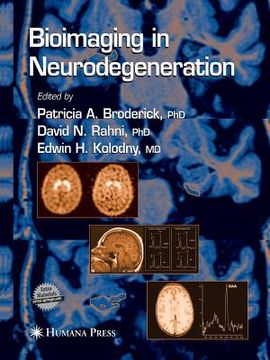
Bioimaging in Neurodegeneration

Broderick, Patricia A. ; Rahni, David N. ; Kolodny, Edwin H. (Author) · Humana · Paperback

Bioimaging in Neurodegeneration - Broderick, Patricia A. ; Rahni, David N. ; Kolodny, Edwin H.

Cheaper New Book Imported to Taiwan
Delivery: 02 Sep - 15 Sep Shipping: 12 to 16 business days.
NT$ 6,458
Faster New Book Imported to Taiwan
Delivery: 20 Aug - 28 Aug Shipping: 4 to 5 business days.
NT$ 9,063
NT$ 6,458

Synopsis "Bioimaging in Neurodegeneration"

Bioimaging is in the forefront of medicine for the diagnosis and helps to predict the progression of AD via mild cognitive treatment of neurodegenerative disease. Conventional magnetic impairment (MCI) studies. resonance imaging (MRI) uses interactive external magnetic fields Novel neuroimaging technologies, such as neuromolecular and resonant frequencies of protons from water molecules. imaging (NMI) with a series of newly developed BRODERICK (R) However, newer sequences, such as magnetization-prepared rapid PROBE sensors, directly image neurotransmitters, precursors, acquisition gradient echo (MPRAGE), are able to seek higher and metabolites in vivo, in real time and within seconds, at separate levels of anatomic resolution by allowing more rapid temporal and selective waveform potentials. NMI, which uses an imaging. Magnetic resonance spectroscopy (MRS) images electrochemical basis for detection, enables the differentiation of metabolic changes, enabling underlying pathophysiologic neurodegenerative diseases in patients who present with mesial dysfunction in neurodegeneration to be deciphered. Neuro- versus neocortical temporal lobe epilepsy. In fact, NMI has some 1 chemicals visible with proton H MRS include N-acetyl aspartate remarkable similarities to MRI insofar as there is technological (NAA), creatine/phosphocreatine (Cr), and choline (Cho); NAA dependence on electron and proton transfer, respectively, and is considered to act as an in vivo marker for neuronal loss and/or further dependence is seen in both NMI and MRI on tissue neuronal dysfunction. By extending imaging to the study of composition such as lipids.

Customers reviews

Frequently Asked Questions about the Book

All books in our catalog are Original.
The book is written in English.
The binding of this edition is Paperback.

Questions and Answers about the Book

Do you have a question about the book? Login to be able to add your own question.

Opinions about Bookdelivery

More customer reviews