你好! Tracked shipping to Taiwan with premium packaging for just NT$300 

Ship to
Taiwan
0
  • argentina
  • chile
  • colombia
  • españa
  • méxico
  • perú
  • estados unidos
  • internacional

Select your country

Americas

Europe

Rest of the world

portada Biology of rice moth on sorghum at different temperature levels
Type
Physical Book
Language
English
Pages
100
Format
Paperback
Dimensions
22.9 x 15.2 x 0.6 cm
Weight
0.16 kg.
ISBN13
9786200118691

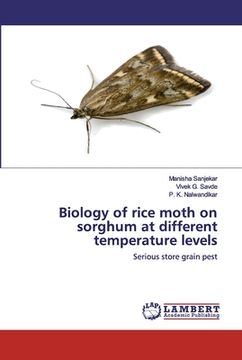
Biology of rice moth on sorghum at different temperature levels

Manisha Sanjekar (Author) · Vivek G. Savde (Author) · P. K. Nalwandikar (Author) · LAP Lambert Academic Publishing · Paperback

Biology of rice moth on sorghum at different temperature levels - Sanjekar, Manisha ; Savde, Vivek G. ; Nalwandikar, P. K.

New Book Imported to Taiwan
Delivery: 03 Sep - 11 Sep Shipping: 13 to 14 business days.
NT$ 2,067
NT$ 2,067

Synopsis "Biology of rice moth on sorghum at different temperature levels"

The rice moth (Corcyra cephalonica Stainton) is one of the common pests of several storage products and cereal commodities in India. Its larval stages cause serious damage to rice, gram, sorghum, maize, groundnut, cotton seeds, peanuts, linseeds, wheat, coffee, cocoa beans and milled products and survive in a wide range of temperature and humidity between 15 oC and 35 oC and between 15 to 90% relative humidity and high damage has been reported even under extreme condition. C. cephalonica is being utilized as main laboratory host for mass rearing or production of beneficial egg parasitoids viz., Trichogramma minutum Riley, and the egg-larval parasitoid like Chelonus blackburnii Cameron, pupal parasitoid like viz., Tetrastichus aggari Rohwar have used its eggs for rearing in laboratory. There is little information available on the development of C. cephalonica under different sets of controlled temperatures and humidity on stored broken grains of sorghum mass multiplication of natural enemies depends on effective rearing of laboratory host like C. cephalonica under different environmental conditions. Thus the present study was done at 20 oC, 25 oC, 30 oC and 35oC temperature levels.

Customers reviews

Frequently Asked Questions about the Book

All books in our catalog are Original.
The book is written in English.
The binding of this edition is Paperback.

Questions and Answers about the Book

Do you have a question about the book? Login to be able to add your own question.

Opinions about Bookdelivery

More customer reviews