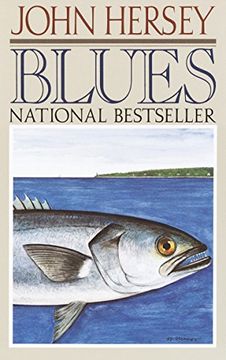
From the revered Pulitzer Prize winning journalist and writer, comes his National Bestseller on one of the world’s oldest and most popular activities, fishing. Presented in narrative form as a conversation between a Fisherman and the Stranger, Hersey draws upon his own experiences and passion as the fisherman reflects on the age old sport, offering his own insights and thoughts. From the depths of the ocean to the creatures near the shore, Hersey perfectly answers why fishing has been such an integral part of humanity. “Almost no one has answered “why fish?” better than Mr. Hersey . . . what he does best of all is evoke wonder.”—New York Times Book Review“Blues is, of course, about much more than the pleasures and techniqu3es of fishing; it is, as Fisherman tells Stranger, about interconnections—the ties between mankind and the natural world, among others.”—The New Yorker“Wonderful . . . He gives us a rich and vivid sense of ocean life. . . . The whole thing is as stately as a minuet, and as graceful.”—Chicago Sun-Times
John Richard Hersey (17 de junio de 1914 – 24 de marzo de 1993) fue un novelista, periodista y profesor estadounidense. Nació en Tianjin, China, hijo de Misioneros, y durante su infancia aprendió a hablar chino antes que inglés. Se graduó de Yale y luego estudió en Cambridge.
Durante la Segunda Guerra Mundial trabajó como corresponsal para las revistas Time y Life. Más famoso aún es su trabajo como escritor tras la guerra: ganó el Premio Pulitzer por su novela Una campana para Adano, que retrata la vida de un pueblo italiano bajo ocupación aliada. Su obra más emblemática es Hiroshima, un reportaje literario en el que relata las vivencias de seis personas tras el bombardeo atómico, combinando rigor periodístico con técnicas narrativas propias de la ficción.
También escribió The Wall, sobre el gueto de Varsovia, y otras novelas con enfoque histórico o social, como The Call, que se inspira parcialmente en la vida de sus padres misioneros. Además, dio clases de escritura en la Universidad de Yale durante muchos años. Su estilo es claro, contenido y marcado por un profundo sentido moral, con el que buscó dar voz a quienes viven en las “zonas límite” de la historia.