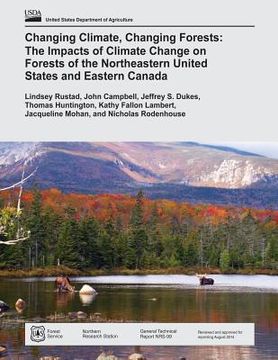
Changing Climate, Changing Forests: The Impacts of Climate Change on Forests of the Northeastern United States and Eastern Canada - Agriculture, U. S. Department of
New Book
Imported
to Taiwan
Delivery: 01 Sep - 14 Sep
Shipping: 17 to 21 business days.
NT$ 917
NT$ 917
Choose the list to add your product or create one New List
Changing Climate, Changing Forests: The Impacts of Climate Change on Forests of the Northeastern United States and Eastern Canada
Agriculture, U. S. Department of
Synopsis "Changing Climate, Changing Forests: The Impacts of Climate Change on Forests of the Northeastern United States and Eastern Canada"
Decades of study on climatic change and its direct and indirect effects on forest ecosystems provide important insights for forest science, management, and policy. A synthesis of recent research from the northeastern United States and eastern Canada shows that the climate of the region has become warmer and wetter over the past 100 years and that there are more extreme precipitation events. Greater change is projected in the future. The amount of projected future change depends on the emissions scenarios used. Tree species composition of northeast forests has shifted slowly in response to climate for thousands of years. However, current human-accelerated climate change is much more rapid and it is unclear how forests will respond to large changes in suitable habitat. Projections indicate significant declines in suitable habitat for spruce-fi r forests and expansion of suitable habitat for oak-dominated forests. Productivity gains that might result from extended growing seasons and carbon dioxide and nitrogen fertilization may be offset by productivity losses associated with the disruption of species assemblages and concurrent stresses associated with potential increases in atmospheric deposition of pollutants, forest fragmentation, and nuisance species. Investigations of links to water and nutrient cycling suggest that changes in evapotranspiration, soil respiration, and mineralization rates could result in significant alterations of key ecosystem processes. Climate change affects the distribution and abundance of many wildlife species in the region through changes in habitat, food availability, thermal tolerances, species interactions such as competition, and susceptibility to parasites and disease. Birds are the most studied northeastern taxa. Twenty-seven of the 38 bird species for which we have adequate long-term records have expanded their ranges predominantly in a northward direction. There is some evidence to suggest that novel species, including pests and pathogens, may be more adept at adjusting to changing climatic conditions, enhancing their competitive ability relative to native species. With the accumulating evidence of climate change and its potential effects, forest stewardship efforts would benefit from integrating climate mitigation and adaptation options in conservation and management plans.