Tracked shipping to Taiwan with premium packaging for just NT$300 

Ship to
Taiwan
0
  • argentina
  • chile
  • colombia
  • españa
  • méxico
  • perú
  • estados unidos
  • internacional

Select your country

Americas

Europe

Rest of the world

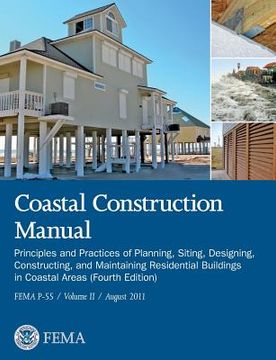
portada Coastal Construction Manual Volume 2: Principles and Practices of Planning, Siting, Designing, Constructing, and Maintaining Residential Buildings in
Type
Physical Book
Language
English
Pages
408
Format
Paperback
Dimensions
24.6 x 18.9 x 2.1 cm
Weight
0.73 kg.
ISBN13
9781782665281

Coastal Construction Manual Volume 2: Principles and Practices of Planning, Siting, Designing, Constructing, and Maintaining Residential Buildings in

Federal Emergency Management Agency ; U. S. Department Of Homeland Security (Author) · www.Militarybookshop.Co.UK · Paperback

Coastal Construction Manual Volume 2: Principles and Practices of Planning, Siting, Designing, Constructing, and Maintaining Residential Buildings in - Federal Emergency Management Agency ; U. S. Department of Homeland Security

New Book Imported to Taiwan
Delivery: 17 Jul - 27 Jul Shipping: 4 to 5 business days.
NT$ 1,271
NT$ 1,271

Synopsis "Coastal Construction Manual Volume 2: Principles and Practices of Planning, Siting, Designing, Constructing, and Maintaining Residential Buildings in"

With full color photographs and illustrations, The 2011 Coastal Construction Manual, Fourth Edition (FEMA P-55), is a two-volume publication that provides a comprehensive approach to planning, siting, designing, constructing, and maintaining homes in the coastal environment. The primary audience for this book (Volume II) is the design professional who is familiar with building codes and standards and has a basic understanding of engineering principles. Volume II is not a standalone reference for designing homes in the coastal environment. The designer should have access to and be familiar with the building codes and standards that are discussed in Volume II and listed in the reference section at the end of each chapter. The designer should also have access to the building codes and standards that have been adopted by the local jurisdiction if they diԀer from the standards and codes that are cited in Volume II. If the local jurisdiction having authority has not adopted a building code, the most recent code should be used. Engineering judgment is sometimes necessary, but designers should not make decisions that will result in a design that does not meet locally adopted building codes.

Customers reviews

Frequently Asked Questions about the Book

All books in our catalog are Original.
The book is written in English.
The binding of this edition is Paperback.

Questions and Answers about the Book

Do you have a question about the book? Login to be able to add your own question.

Opinions about Bookdelivery

More customer reviews