你好! Tracked shipping to Taiwan with premium packaging for just NT$300 

Ship to
Taiwan
0
  • argentina
  • chile
  • colombia
  • españa
  • méxico
  • perú
  • estados unidos
  • internacional

Select your country

Americas

Europe

Rest of the world

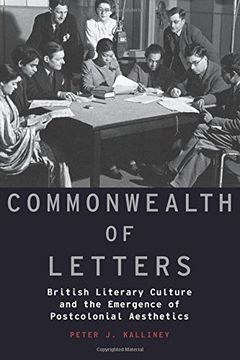
portada Commonwealth of Letters: British Literary Culture and the Emergence of Postcolonial Aesthetics (Modernist Literature and Culture)
Type
Physical Book
Year
2015
Language
English
Pages
336
Format
Paperback
ISBN13
9780190455927

Commonwealth of Letters: British Literary Culture and the Emergence of Postcolonial Aesthetics (Modernist Literature and Culture)

Peter J. Kalliney (Author) · Oxford University Press · Paperback

Commonwealth of Letters: British Literary Culture and the Emergence of Postcolonial Aesthetics (Modernist Literature and Culture) - Peter J. Kalliney

Cheaper New Book Imported to Taiwan
Delivery: 10 Sep - 22 Sep Shipping: 11 to 14 business days.
NT$ 2,010
Faster New Book Imported to Taiwan
Delivery: 02 Sep - 10 Sep Shipping: 5 to 6 business days.
NT$ 2,567
NT$ 2,010

Synopsis "Commonwealth of Letters: British Literary Culture and the Emergence of Postcolonial Aesthetics (Modernist Literature and Culture) "

Commonwealth of Letters examines midcentury literary institutions integral to modernism and postcolonial writing. Several organizations central to interwar modernism, such as the BBC, influential publishers, and university English departments, became important sites in the emergence of postcolonial literature after the war. How did some of modernism's leading figures of the 1930s-such as T.S. Eliot, Louis MacNeice, and Stephen Spender-come to admire late colonial and early postcolonial literature in the 1950s? Similarly, why did late colonial and early postcolonial writers-including Chinua Achebe, Kamau Brathwaite, Claude McKay, and Ngugi wa Thiong'o-actively seek alliances with metropolitan intellectuals? Peter Kalliney's original and extensive archival work on modernist cultural institutions demonstrates that this disparate group of intellectuals had strong professional incentives to treat one another more as fellow literary professionals, and less as political or cultural antagonists.Surprisingly, metropolitan intellectuals and their late colonial counterparts leaned heavily on modernist theories of aesthetic autonomy to facilitate their collaborative ventures. For white, metropolitan writers, T.S. Eliot's notion of impersonality could help recruit new audiences and conspirators from colonized regions of the world. For black, colonial writers, aesthetic autonomy could be used to imagine a literary sphere uniquely resistant to the forms of racial prejudice endemic to the colonial system. This strategic collaboration did not last forever, but as Commonwealth of Letters shows, it left a lasting imprint on the ultimate disposition of modernism and the evolution of postcolonial literature.

Customers reviews

Frequently Asked Questions about the Book

All books in our catalog are Original.
The book is written in English.
The binding of this edition is Paperback.

Questions and Answers about the Book

Do you have a question about the book? Login to be able to add your own question.

Opinions about Bookdelivery

More customer reviews