你好! Tracked shipping to Taiwan with premium packaging for just NT$300 

Ship to
Taiwan
0
  • argentina
  • chile
  • colombia
  • españa
  • méxico
  • perú
  • estados unidos
  • internacional

Select your country

Americas

Europe

Rest of the world

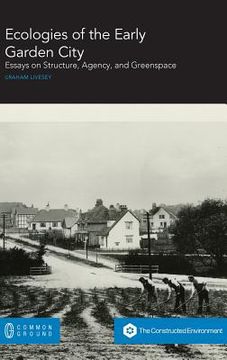
portada Ecologies of the Early Garden City: Essays on Structure, Agency, and Greenspace
Type
Physical Book
Language
English
Pages
174
Format
Hardcover
Dimensions
23.4 x 15.6 x 1.4 cm
Weight
0.45 kg.
ISBN13
9781863351270

Ecologies of the Early Garden City: Essays on Structure, Agency, and Greenspace

Graham Livesey (Author) · Common Ground Research Networks · Hardcover

Ecologies of the Early Garden City: Essays on Structure, Agency, and Greenspace - Livesey, Graham

New Book Imported to Taiwan
Delivery: 27 Aug - 07 Sep Shipping: 4 to 5 business days.
NT$ 2,113
NT$ 2,113

Synopsis "Ecologies of the Early Garden City: Essays on Structure, Agency, and Greenspace"

This is a study of the inaugural decade (1903-1913) of the first Garden City at Letchworth, in Hertfordshire, employing theories derived from landscape ecology and assemblage theory. The early Garden City movement, as represented by the writings of Ebenezer Howard--particularly his book Tomorrow: A Peaceful Path to Real Reform (1898)--was a concerted attempt to redefine many urban practices. The Garden City strove to unite town and country through the garden, it emerged as a direct response to what were perceived to be the evils of the large industrial cities of the nineteenth century. The field of landscape ecology provides a structural method for examining the behavior of landscapes, by focusing on flow, patch, and boundary systems. These are examined in the urban context, along with the broad topic of agency. Ecological factors are complemented by Gilles Deleuze and Félix Guattari's concept of "assemblage," with its emphasis on territorial, cultural, and formal factors. This provides the material for a study of the theories of Ebenezer Howard and the early history of Letchworth Garden City. This includes exploring the central role of gardens, farms, and the greenbelt in the Garden City model, along with agents such as the gardener, farmer, and manager. The Garden City also pioneered modern town-planning, and contributed in such areas as planned neighborhoods, housing design, streetscape composition, architectural controls, controlled growth, urban zoning, greenspace organization, and regional responsiveness.

Customers reviews

Frequently Asked Questions about the Book

All books in our catalog are Original.
The book is written in English.
The binding of this edition is Hardcover.

Questions and Answers about the Book

Do you have a question about the book? Login to be able to add your own question.

Opinions about Bookdelivery

More customer reviews