Tracked shipping to Taiwan with premium packaging for just NT$300 

Ship to
Taiwan
0
  • argentina
  • chile
  • colombia
  • españa
  • méxico
  • perú
  • estados unidos
  • internacional

Select your country

Americas

Europe

Rest of the world

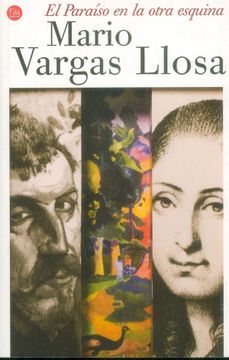
portada El paraíso en la otra esquina (in Spanish)
Type
Physical Book
Topic
bolsillos
Collection
NOVELA
Year
2009
Language
Spanish
Pages
528
Format
Paperback
Dimensions
12.5 x 19 cm
ISBN
8466320288
ISBN13
9788466320283
Edited in
España

El paraíso en la otra esquina (in Spanish)

Mario Vargas Llosa (Author) · PUNTO DE LECTURA · Paperback

El paraíso en la otra esquina (in Spanish) - Mario Vargas Llosa

Used BookGood Condition Imported to Taiwan
Delivery: 19 Aug - 02 Sep Shipping: 8 to 12 business days.
NT$ 861
(Good Condition)NT$ 861

Synopsis "El paraíso en la otra esquina (in Spanish)"

Un nexo de unión entre dos personajes que optan por dos modelos vitales opuestos que desvelan un deseo común: el de alcanzar un paraíso donde sea posible la felicidad para los seres humanos.Dos vidas: la de Flora Tristán, que pone todos sus esfuerzos en la lucha por los derechos de la mujer y de los obreros, y la de Paul Gauguin, el hombre que descubre su pasión por la pintura y abandona su existencia burguesa para viajar a Tahití en busca de un mundo sin contaminar por las convenciones.Dos concepciones del sexo: la de Flora, que sólo ve en él un instrumento de dominio masculino y la de Gauguin, que lo considera una fuerza vital imprescindible puesta al servicio de su creatividad.¿Qué tienen en común esas dos vidas desligadas y opuestas, aparte del vínculo familiar por ser Flora la abuela materna de Gauguin? Esto es lo que Vargas Llosa pone de relieve en El Paraíso en la otra esquina (2003): el mundo de utopías que fue el siglo XIX.La crítica ha dicho: «Dada la maestría de Vargas Llosa, el resultado no es que sea valioso, sino que resulta fascinante; no es una novela grande sino dos grandes novelas, dos narraciones históricas... Libro magistral, que son dos, como dos son los paraísos aquí evocados.» Rafael Conte, El País«La tarea de documentación e investigación que está detrás de su construcción es realmente impresionante y no menos el modo perfecto como realiza la fusión entre lo real y lo ficticio... en cuanto a las proporciones épicas que sus relatos pueden alcanzar, tal vez no haya ahora nadie en nuestra lengua que lo pueda superar.» José Miguel Oviedo, ABC Cultural«La novela de Vargas Llosa es una prueba de su capacidad para recrear imaginativamente el pasado y permitirnos extraer, como lectores, varias y aún contradictorias opciones morales.» Joaquín Marco, El Mundo ENGLISH DESCRIPTIONA century passed between the birth of Flora Tristán and the death of her grandson, the great painter Paul Gauguin. They never met, but both dreamed, each in their own way, with a better world. With this novel we get to know these two great personalities that had similar characteristics: an impressive stubbornness and a bulletproof determination and motivation. "The dramatic lives of two bold, independent adventurers ?Paul Gauguin and his grandmother Flora Tristán, a trail-blazing women's suffragist? as imagined by "one of the master storytellers of our time" ?Chicago Tribune Book World
Mario Vargas Llosa
  (Author)
View Author's Page
Jorge Mario Pedro Vargas Llosa (Arequipa, March 28, 1936), known as Mario Vargas Llosa, 1st Marquis of Vargas Llosa, is a Peruvian writer who also holds Spanish nationality since 1993 and Dominican nationality since June 2022. Considered one of the most important contemporary novelists and essayists, his works have received numerous awards, including the Nobel Prize in Literature 2010, the Cervantes Prize 1994 —considered the most important in the Spanish language—, the Prince of Asturias Award for Literature 1986, the Biblioteca Breve Prize 1962, the Rómulo Gallegos Prize 1967, and the Planeta Prize 1993, among others. Alongside Gabriel García Márquez, Julio Cortázar, and Carlos Fuentes, he is one of the central figures of the Latin American boom

He rose to fame in the 1960s with novels such as The Time of the Hero (1963), The Green House (1966), and Conversation in the Cathedral (1969). He continued to prolifically cultivate various literary genres, such as essays, articles, and theater. Several of his works have been adapted into films and television. Most of his novels are set in Peru and explore his views on Peruvian society; however, in The War of the End of the World (1981), The Feast of the Goat (2000), and The Dream of the Celt (2010) he sets his plots in other countries.
See more
See less

Customers reviews

Frequently Asked Questions about the Book

All books in our catalog are Original.
The book is written in Spanish.
The binding of this edition is Paperback.

Questions and Answers about the Book

Do you have a question about the book? Login to be able to add your own question.

Opinions about Bookdelivery

More customer reviews