你好! Tracked shipping to Taiwan with premium packaging for just NT$300 

Ship to
Taiwan
0
  • argentina
  • chile
  • colombia
  • españa
  • méxico
  • perú
  • estados unidos
  • internacional

Select your country

Americas

Europe

Rest of the world

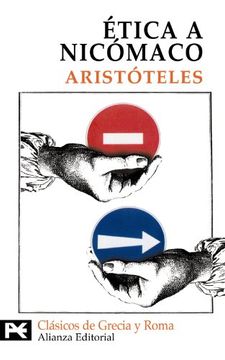
portada Ética a Nicómaco (el Libro de Bolsillo - Bibliotecas Temáticas - Biblioteca de Clásicos de Grecia y Roma) (in Spanish)
Type
Physical Book
Category
Política y Ciencias Sociales
Topic
el libro de bolsillo - bibliotecas temáticas - bib
Collection
el libro de bolsillo - bibliotecas temáticas - bib
Year
2004
Language
Spanish
Pages
320
Format
Paperback
Dimensions
11,00 x 17,50
ISBN
8420639281
ISBN13
9788420639284
Edited in
España

Ética a Nicómaco (el Libro de Bolsillo - Bibliotecas Temáticas - Biblioteca de Clásicos de Grecia y Roma) (in Spanish)

Aristóteles (Author) · Alianza Editorial · Paperback

Ética a Nicómaco (el Libro de Bolsillo - Bibliotecas Temáticas - Biblioteca de Clásicos de Grecia y Roma) (in Spanish) - Aristóteles

Política y ciencias sociales

Used BookGood Condition Imported to Taiwan
Delivery: 28 Aug - 11 Sep Shipping: 9 to 13 business days.
NT$ 1,252
(Good Condition)NT$ 1,252

Synopsis "Ética a Nicómaco (el Libro de Bolsillo - Bibliotecas Temáticas - Biblioteca de Clásicos de Grecia y Roma) (in Spanish)"

La Historia del Pensamiento muestra que los hombres de todos los tiempos han vuelto la mirada una y otra vez hacia la Ética a Nicómaco donde encontraron respuestas a sus acuciantes preguntas sobre qué vida merece la pena ser vivida, qué es la amistad, la justicia, la bondad, la verdad y qué virtudes son necesarias para vivir con otros en sociedad. El hombre es un ser vivo que vive y convive. Su existencia no se agota en un vivir, sino que se realiza plenamente en el convivir, en el ser con otros. En esa convivencia el hombre despliega su actuación, y es ahí donde aparece la ética que juzga, que estudia, los actos humanos. Acciones que permiten una relación dinámica con otros en convivencia plena que lo humaniza, lo faculta para realizar el ideal de bien vivir en sociedad. Aristóteles propuso una ética que abarca todo el amplio espectro del actuar del hombre, aunque escribiera tres tradaos de ética, la ética no fue para él un recetario al estilo de los sofistas, sino una investigación de cómo surge el sentido moral en el hombre y cómo se manifiesta. El nacimiento tiene que ver con el mismo hombre, es intrínseco a él, y su manifestación es la forma de vida del ser humano que es totalidad y está relacionada con le ética, porque el hombre es un animal racional y comunicativo, un ser que trabaja y con su esfuerzo adquiere, fabrica, los medios necesarios para su subsistencia. Esta capacidad configura al hombre como un ser que lleva una existencia activa, pero libre porque es dueño de ...
Aristóteles
  (Author)
View Author's Page
Aristotle (Stagira, 384 BC-Chalcis, 322 BC) was a philosopher, polymath, and Greek scientist born in the city of Stagira, in the north of Ancient Greece. He is considered, along with Plato, the father of Western philosophy. His ideas have had a huge influence on the intellectual history of the West for more than two millennia.

He was a disciple of Plato and other thinkers, such as Eudoxus of Cnidus, during the twenty years he was at the Academy of Athens. Shortly after Plato's death, Aristotle left Athens to be the tutor of Alexander the Great in the Kingdom of Macedonia for almost 5 years. In the last stage of his life, he founded the Lyceum in Athens, where he taught until a year before his death.

Aristotle wrote about 200 works, of which only 31 have been preserved (none of them intended for publication) in the Corpus Aristotelicum on a wide variety of topics, including: logic, metaphysics, philosophy of science, ethics, political philosophy, aesthetics, rhetoric, physics, astronomy, and biology. Aristotle transformed many, if not all, of the areas of knowledge he addressed. He is recognized as the founding father of logic and biology, since although there are reflections and writings on both subjects before him, it is in Aristotle's work that the first systematic investigations are found. Aristotle has also been called the father of political science, zoology, embryology, natural law, scientific method, rhetoric, psychology, realism, criticism, individualism, teleology, and meteorology.
See more
See less

Customers reviews

Frequently Asked Questions about the Book

All books in our catalog are Original.
The book is written in Spanish.
The binding of this edition is Paperback.

Questions and Answers about the Book

Do you have a question about the book? Login to be able to add your own question.

Opinions about Bookdelivery

More customer reviews