你好! Shipping to Taiwan with premium packaging for just NT$300 

Ship to
Taiwan
0
  • argentina
  • chile
  • colombia
  • españa
  • méxico
  • perú
  • estados unidos
  • internacional

Select your country

Americas

Europe

Rest of the world

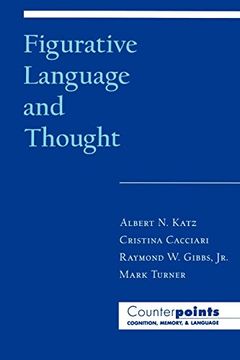
portada Figurative Language and Thought
Type
Physical Book
Year
1998
Language
English
Pages
208
Format
Paperback
ISBN
0195109635
ISBN13
9780195109634
Edition No.
1

Figurative Language and Thought

Albert N. Katz; Cristina Cacciari; Raymond W. Gibbs; Mark Turner (Author) · Oxford University Press · Paperback

Figurative Language and Thought - Albert N. Katz; Cristina Cacciari; Raymond W. Gibbs; Mark Turner

Cheaper New Book Imported to Taiwan
Delivery: 22 Sep - 02 Oct Shipping: 10 to 13 business days.
NT$ 1,532
Faster New Book Imported to Taiwan
Delivery: 14 Sep - 22 Sep Shipping: 4 to 5 business days.
NT$ 1,809
NT$ 1,532

Synopsis "Figurative Language and Thought "

Our understanding of the nature and processing of figurative language is central to several important issues in cognitive science, including the relationship of language and thought, how we process language, and how we comprehend abstract meaning. Over the past fifteen years, traditional approaches to these issues have been challenged by experimental psychologists, linguists, and other cognitive scientists interested in the structures of the mind and the processes that operate on them. In Figurative Language and Thought, internationally recognized experts in the field of figurative language, Albert Katz, Mark Turner, Raymond W. Gibbs Jr., and Cristina Cacciari, provide a coherent and focused debate on the subject. The book's authors discuss a variety of fundamental questions, including: What can figures of speech tell us about the structure of the conceptual system? If and how should we distinguish the literal from the nonliteral in our theories of language and thought? Are we primarily figurative thinkers and consequently figurative language users or the other way around? Why do we prefer to speak metaphorically in everyday conversation, when literal options may be available for use? Is metaphor the only vehicle through which we can understand abstract concepts? What role do cultural and social factors play in our comprehension of figurative language? These and related questions are raised and argued in an integrative look at the role of nonliteral language in cognition. This volume, a part of Counterpoints series, will be thought-provoking reading for a wide range of cognitive psychologists, linguists, and philosophers.

Customers reviews

Frequently Asked Questions about the Book

All books in our catalog are Original.
The book is written in English.
The binding of this edition is Paperback.

Questions and Answers about the Book

Do you have a question about the book? Login to be able to add your own question.

Opinions about Bookdelivery

More customer reviews