你好! Shipping to Taiwan with premium packaging for just NT$300 

Ship to
Taiwan
0
  • argentina
  • chile
  • colombia
  • españa
  • méxico
  • perú
  • estados unidos
  • internacional

Select your country

Americas

Europe

Rest of the world

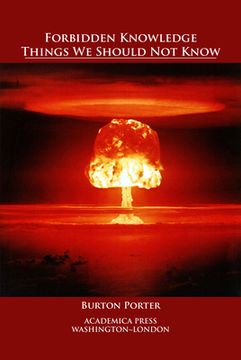
portada Forbidden Knowledge: Things we Should not Know
Type
Physical Book
Language
English
Pages
272
Format
Hardcover
Dimensions
22.9x15.2x1.4 cm
Weight
0.48 kg.
ISBN13
9781680532142

Forbidden Knowledge: Things we Should not Know

Burton Porter (Author) · Academica Press · Hardcover

Forbidden Knowledge: Things we Should not Know - Porter, Burton

Cheaper New Book Imported to Taiwan
Delivery: 30 Sep - 13 Oct Shipping: 12 to 16 business days.
NT$ 4,193
Faster New Book Imported to Taiwan
Delivery: 21 Sep - 29 Sep Shipping: 5 to 6 business days.
NT$ 6,417
NT$ 4,193

Synopsis "Forbidden Knowledge: Things we Should not Know"

In this book eminent philosopher Burton Porter examines the concept of "forbidden knowledge" in religion, science, government, and psychology. From the tree of knowledge in the Garden of Eden (forbidden fruit), to world altering scientific research (nuclear power, stem-cells, cloning) to damning government secrets (Abu Ghraib, domestic spying), to traumatic experiences that individuals want to repress (sexual abuse), humanity has encountered knowledge that has been hidden and suppressed. We experience this denial as a loss of control and respect, and we want to know exactly what knowledge has been prohibited and why we cannot have access to it. Forbidden knowledge, therefore, is of enormous interest to the general public. The basic question, then, is: when, if ever, should knowledge be forbidden? Are there sacred realms that human beings are not meant to explore? Can scientific research be a Frankenstein monster, which will harm us one day? When are government secrets necessary for national security, and when does the public have a right to know? Is too much information classified? When do databanks, eavesdropping, and surveillance invade our privacy? Is self-deception justified if the truth would be psychologically disturbing? In short, can we know more than is good for us? The author takes the general position that too much material is prohibited, especially today, even while business and government invade individual privacy more and more. A primary assumption in a democracy is that we can have confidence in the people, so information should not be forbidden unless there is a vital and compelling reason to withhold it.

Customers reviews

Frequently Asked Questions about the Book

All books in our catalog are Original.
The book is written in English.
The binding of this edition is Hardcover.

Questions and Answers about the Book

Do you have a question about the book? Login to be able to add your own question.

Opinions about Bookdelivery

More customer reviews