Tracked shipping to Taiwan with premium packaging for just NT$300 

Ship to
Taiwan
0
  • argentina
  • chile
  • colombia
  • españa
  • méxico
  • perú
  • estados unidos
  • internacional

Select your country

Americas

Europe

Rest of the world

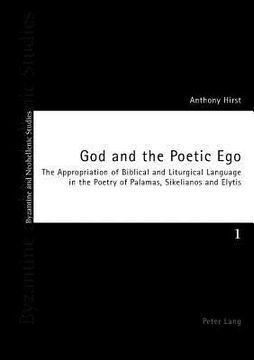
portada God and the Poetic Ego: The Appropriation of Biblical and Liturgical Language in the Poetry of Palamas, Sikelianos and Elytis
Type
Physical Book
Language
English
Pages
428
Format
Paperback
Dimensions
22.9 x 15.2 x 2.2 cm
Weight
0.57 kg.
ISBN13
9783039103270

God and the Poetic Ego: The Appropriation of Biblical and Liturgical Language in the Poetry of Palamas, Sikelianos and Elytis

Anthony Hirst (Author) · Andrew Louth (Other) · David Ricks (Other) · Peter Lang Ltd, International Academic Publis · Paperback

God and the Poetic Ego: The Appropriation of Biblical and Liturgical Language in the Poetry of Palamas, Sikelianos and Elytis - Louth, Andrew ; Ricks, David ; Hirst, Anthony

New Book Imported to Taiwan *
Delivery: 19 May - 27 May Shipping: 5 to 6 business days.
NT$ 3,609
NT$ 3,609
Delivery to any Taiwan address between Tuesday, May 19 and Wednesday, May 27

Synopsis "God and the Poetic Ego: The Appropriation of Biblical and Liturgical Language in the Poetry of Palamas, Sikelianos and Elytis"

The Greek Bible and the services of the Orthodox Church have proved a rich source of language for many poets of modern Greece, and perhaps for none more than for Kostis Palamas, Angelos Sikelianos and Odysseas Elytis, whose overlapping careers span the period 1876-1996. A blurring of the boundaries between Orthodoxy and 'Greekness' (hellênikotêta, which all three poets celebrate) has often led critics to assume from the Christian borrowings in the poetry the Christian allegiance of the poets. Through detailed analyses of selected poems, focusing on their relation to Biblical and liturgical source texts, this book questions whether the work of these poets is compatible with Christianity at all. It asks whether a Christ who is assimilated, along with the Virgin Mary, into the ancient Greek pantheon, or presented as a symbol of Beauty, or as object of the erotic desire of the women of the Gospels is still within the realm of Orthodoxy. Above all it asks whether, when the poetic ego appropriates to itself words which in their original context belong to Christ or Jehovah, there is any room left for the divine, or whether the poet has not in fact elbowed God off the stage altogether.

Customers reviews

Frequently Asked Questions about the Book

All books in our catalog are Original.
The book is written in English.
The binding of this edition is Paperback.

Questions and Answers about the Book

Do you have a question about the book? Login to be able to add your own question.

Opinions about Bookdelivery

More customer reviews