Tracked shipping to Taiwan with premium packaging for just NT$300 

Ship to
Taiwan
0
  • argentina
  • chile
  • colombia
  • españa
  • méxico
  • perú
  • estados unidos
  • internacional

Select your country

Americas

Europe

Rest of the world

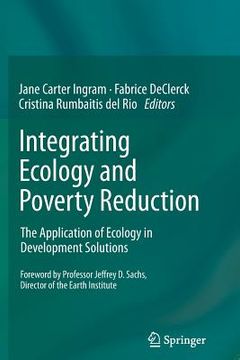
portada Integrating Ecology and Poverty Reduction: The Application of Ecology in Development Solutions
Type
Physical Book
Publisher
Language
English
Pages
328
Format
Paperback
Dimensions
23.4 x 15.6 x 1.8 cm
Weight
0.48 kg.
ISBN13
9781489995902

Integrating Ecology and Poverty Reduction: The Application of Ecology in Development Solutions

Ingram, Jane Carter ; Declerck, Fabrice ; Rumbaitis Del Rio, Cristina (Author) · Springer · Paperback

Integrating Ecology and Poverty Reduction: The Application of Ecology in Development Solutions - Ingram, Jane Carter ; Declerck, Fabrice ; Rumbaitis Del Rio, Cristina

Cheaper New Book Imported to Taiwan
Delivery: 30 Jul - 12 Aug Shipping: 12 to 16 business days.
NT$ 4,972
Faster New Book Imported to Taiwan
Delivery: 20 Jul - 28 Jul Shipping: 4 to 5 business days.
NT$ 6,413
NT$ 4,972

Synopsis "Integrating Ecology and Poverty Reduction: The Application of Ecology in Development Solutions"

The second volume of this series, Integrating Ecology into Global Poverty Reduction Efforts: Opportunities and solutions, builds upon the first volume, Integrating Ecology into Global Poverty Reduction Efforts: The ecological dimensions to poverty, by exploring the way in which ecological science and tools can be applied to address major development challenges associated with rural poverty. In volume 2, we explore how ecological principles and practices can be integrated, conceptually and practically, into social, economic, and political norms and processes to positively influence poverty and the environment upon which humans depend. Specifically, these chapters explore how ecological science, approaches and considerations can be leveraged to enhance the positive impacts of education, gender relations, demographics, markets and governance on poverty reduction. As the final chapter on "The future and evolving role of ecological science" points out, sustainable development must be build upon an ecological foundation if it is to be realized. The chapters in this volume illustrate how traditional paradigms and forces guiding development can be steered along more sustainable trajectories by utilizing ecological science to inform project planning, policy development, market development and decision making.

Customers reviews

Frequently Asked Questions about the Book

All books in our catalog are Original.
The book is written in English.
The binding of this edition is Paperback.

Questions and Answers about the Book

Do you have a question about the book? Login to be able to add your own question.

Opinions about Bookdelivery

More customer reviews