Tracked shipping to Taiwan with premium packaging for just NT$300 

Ship to
Taiwan
0
  • argentina
  • chile
  • colombia
  • españa
  • méxico
  • perú
  • estados unidos
  • internacional

Select your country

Americas

Europe

Rest of the world

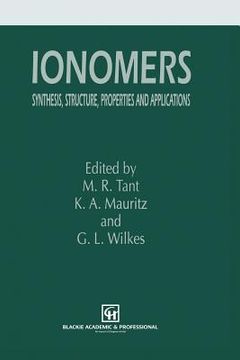
portada ionomers: synthesis, structure, properties and applications
Type
Physical Book
Publisher
Year
2011
Language
English
Pages
514
Format
Paperback
Dimensions
23.4 x 15.6 x 2.7 cm
Weight
0.73 kg.
ISBN
9401071535
ISBN13
9789401071536

ionomers: synthesis, structure, properties and applications

M. R. Tant (Illustrated by) · K. a. Mauritz (Illustrated by) · G. L. Wilkes (Illustrated by) · Springer · Paperback

ionomers: synthesis, structure, properties and applications - Tant, M. R. ; Mauritz, K. a. ; Wilkes, G. L.

Cheaper New Book Imported to Taiwan
Delivery: 25 Aug - 08 Sep Shipping: 13 to 17 business days.
NT$ 12,897
Faster New Book Imported to Taiwan
Delivery: 13 Aug - 21 Aug Shipping: 5 to 6 business days.
NT$ 16,583
NT$ 12,897

Synopsis "ionomers: synthesis, structure, properties and applications"

Polymers have achieved an enviable position as the class of materials having the highest volume of production, exceeding that of both metals and ceramics. The meteoric rise in the production and utilization of polymers has been due to advances in polymer synthesis which allow the creation of specific and well-defined molecular structures, to new knowledge concerning the relationships between polymer structure and properties, and to an improved understanding of how processing can be used as a tool to develop morphological features which result in desired properties. Polymers have truly become 'engineered materials' in every sense of the term. Polymer scientists and engineers are forever seeking to modify and improve the properties of synthetic polymeric systems for use in specific applications. Towards this end they have often looked to nature for advice on how to design molecules for specific needs. An excellent illustration of this is the use of noncovalent bonding (ionic, hydrogen, and van der Waals) in lipids, proteins, and nucleic acids, where these noncovalent bonds, acting both intra- and intermolecularly, precisely control the structure and thus the function of the entire system. The utilization of ionic bonding, in particular in man-made polymers has attracted widespread interest in recent years, since ionic interactions exert a similar strong influence on the structure and properties of these synthetic systems.

Customers reviews

Frequently Asked Questions about the Book

All books in our catalog are Original.
The book is written in English.
The binding of this edition is Paperback.

Questions and Answers about the Book

Do you have a question about the book? Login to be able to add your own question.

Opinions about Bookdelivery

More customer reviews