你好! Shipping to Taiwan with premium packaging for just NT$300 

Ship to
Taiwan
0
  • argentina
  • chile
  • colombia
  • españa
  • méxico
  • perú
  • estados unidos
  • internacional

Select your country

Americas

Europe

Rest of the world

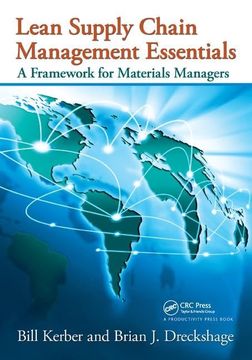
portada Lean Supply Chain Management Essentials: A Framework for Materials Managers

Lean Supply Chain Management Essentials: A Framework for Materials Managers

Bill Kerber (Author) · Brian J. Dreckshage (Author) · CRC Press · Hardcover

Lean Supply Chain Management Essentials: A Framework for Materials Managers - Kerber, Bill ; Dreckshage, Brian J.

Cheaper New Book Imported to Taiwan
Delivery: 17 Sep - 25 Sep Shipping: 13 to 14 business days.
NT$ 9,820
Faster New Book Imported to Taiwan
Delivery: 04 Sep - 14 Sep Shipping: 4 to 5 business days.
NT$ 11,905
NT$ 9,820

Synopsis "Lean Supply Chain Management Essentials: A Framework for Materials Managers"

Presenting an alternate approach to supply chain management, Lean Supply Chain Management Essentials: A Framework for Materials Managers explains why the traditional materials planning environment, typically embodied by an Enterprise Resource Planning (ERP) system, is an ineffective support system for a company that wants to adopt Lean practices. It begins by defining supply chain management basics, including roles, objectives, and responsibilities from a traditional framework. Next, it describes Lean basics and explores the conflicts between Lean and the traditional framework. The book focuses on the materials management aspects of Lean, such as leveling work into the value stream, heijunka scheduling, standard work, and the concept of intervals, including Every Part Every Interval (EPEI). By combining traditional materials management tools, such as Sales and Operations Planning (SandOP), with Lean manufacturing approaches and applying them to different manufacturing environments, the authors clarify the logic behind why you are doing what you're doing with Lean components and how they fit together as a system. Specifically, they explain how to: Determine which leveling strategy to use to smooth production Calculate interval to determine lot sizes in various production environments Apply Lean to purchasing, warehouse, and logistics areas Use your value stream map for green initiatives and risk management Replace capacity planning and shop floor control with visual factory, operator balance charts, EPEI, and plan for every part Illustrating why balancing demand and capacity is better than trying to balance supply and demand, the book includes a definitive chart that matches Lean tools to the planning and control charts that have served as the model for ERP systems. It integrates the principles learned from Toyota's fift

Customers reviews

Frequently Asked Questions about the Book

All books in our catalog are Original.
The book is written in English.
The binding of this edition is Hardcover.

Questions and Answers about the Book

Do you have a question about the book? Login to be able to add your own question.

Opinions about Bookdelivery

More customer reviews