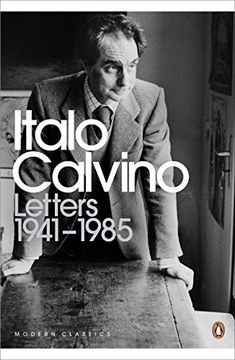
Synopsis "Letters 1941-1985 (Penguin Modern Classics) "
This is the first collection in English of the extraordinary letters of one of the great writers of the twentieth century. Italy's most important postwar novelist, Italo Calvino (1923-1985) achieved worldwide fame with such books as Cosmicomics, Invisible Cities, and If on a Winter’s Night a Traveler. But he was also an influential literary critic, an important literary editor, and a masterful letter writer whose correspondents included Umberto Eco, Primo Levi, Gore Vidal, Leonardo Sciascia, Natalia Ginzburg, Michelangelo Antonioni, Pier Paolo Pasolini, and Luciano Berio. This book includes a generous selection of about 650 letters, written between World War II and the end of Calvino’s life. Selected and introduced by Michael Wood, the letters are expertly rendered into English and annotated by well-known Calvino translator Martin McLaughlin.The letters are filled with insights about Calvino’s writing and that of others; about Italian, American, English, and French literature; about literary criticism and literature in general; and about culture and politics. The book also provides a kind of autobiography, documenting Calvino’s Communism and his resignation from the party in 1957, his eye-opening trip to the United States in 1959-60, his move to Paris (where he lived from 1967 to 1980), and his trip to his birthplace in Cuba (where he met Che Guevara). Some lengthy letters amount almost to critical essays, while one is an appropriately brief defense of brevity, and there is an even shorter, reassuring note to his parents written on a scrap of paper while he and his brother were in hiding during the antifascist Resistance.This is a book that will fascinate and delight Calvino fans and anyone else interested in a remarkable portrait of a great writer at work. --Este texto se refiere a la edición Hardcover.
Italo Calvino (1923–1985) fue uno de los escritores italianos más influyentes del siglo XX, reconocido por su estilo innovador y su capacidad para mezclar fantasía, filosofía, ciencia y juego literario. Nacido en Santiago de las Vegas, Cuba, en una familia de intelectuales italianos, se trasladó a Italia durante su infancia. Su experiencia como partisano durante la Segunda Guerra Mundial marcó profundamente su primera etapa como escritor, reflejada en obras como El sendero de los nidos de araña.
A lo largo de su carrera, Calvino transitó por distintas etapas estilísticas. En los años 50, escribió su célebre trilogía Nuestros antepasados (El vizconde demediado, El barón rampante y El caballero inexistente), donde mezcla lo fantástico con lo filosófico. Más tarde, mostró interés por la estructura, el lenguaje y la matemática narrativa, visible en obras como Las ciudades invisibles y Si una noche de invierno un viajero, una de las novelas más emblemáticas del posmodernismo literario.
Fue editor en la editorial Einaudi y colaborador habitual en revistas culturales. Su pensamiento claro, su humor sutil y su constante búsqueda de nuevas formas de narrar hicieron de él un autor imprescindible. Murió en 1985, dejando un legado literario que sigue fascinando a lectores de todo el mundo.