Tracked shipping to Taiwan with premium packaging for just NT$300 

Ship to
Taiwan
0
  • argentina
  • chile
  • colombia
  • españa
  • méxico
  • perú
  • estados unidos
  • internacional

Select your country

Americas

Europe

Rest of the world

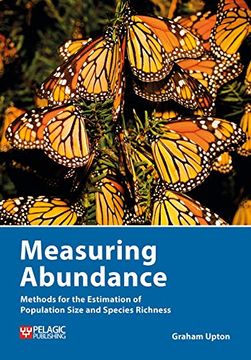
portada Measuring Abundance: Methods for the Estimation of Population Size and Species Richness (Data in the Wild)
Type
Physical Book
Year
2020
Language
English
Pages
229
Format
Hardcover
ISBN13
9781784272326

Measuring Abundance: Methods for the Estimation of Population Size and Species Richness (Data in the Wild)

Graham Upton (Author) · Pelagic Publishing Ltd · Hardcover

Measuring Abundance: Methods for the Estimation of Population Size and Species Richness (Data in the Wild) - Graham Upton

Cheaper New Book Imported to Taiwan
Delivery: 31 Jul - 14 Aug Shipping: 16 to 21 business days.
NT$ 2,604
Faster New Book Imported to Taiwan
Delivery: 16 Jul - 24 Jul Shipping: 5 to 6 business days.
NT$ 4,491
NT$ 2,604

Synopsis "Measuring Abundance: Methods for the Estimation of Population Size and Species Richness (Data in the Wild) "

Measuring the abundance of individuals and the diversity of species are core components of most ecological research projects and conservation monitoring. This book brings together in one place, for the first time, the methods used to estimate the abundance of individuals in nature.The statistical basis of each method is detailed along with practical considerations for survey design and data collection. Methods are illustrated using data ranging from Alaskan shrubs to Yellowstone grizzly bears, not forgetting Costa Rican ants and Prince Edward Island lobsters. Where necessary, example code for use with the open source software R is supplied. When appropriate, reference is made to other widely used programs.After opening with a brief synopsis of relevant statistical methods, the first section deals with the abundance of stationary items such as trees, shrubs, coral, etc. Following a discussion of the use of quadrats and transects in the contexts of forestry sampling and the assessment of plant cover, there are chapters addressing line-intercept sampling, the use of nearest-neighbour distances, and variable sized plots.The second section deals with individuals that move, such as birds, mammals, reptiles, fish, etc. Approaches discussed include double-observer sampling, removal sampling, capture-recapture methods and distance sampling.The final section deals with the measurement of species richness; species diversity; species-abundance distributions; and other aspects of diversity such as evenness, similarity, turnover and rarity.This is an essential reference for anyone involved in advanced undergraduate or postgraduate ecological research and teaching, or those planning and carrying out data analysis as part of conservation survey and monitoring programmes.

Customers reviews

Frequently Asked Questions about the Book

All books in our catalog are Original.
The book is written in English.
The binding of this edition is Hardcover.

Questions and Answers about the Book

Do you have a question about the book? Login to be able to add your own question.

Opinions about Bookdelivery

More customer reviews