你好! Shipping to Taiwan with premium packaging for just NT$300 

Ship to
Taiwan
0
  • argentina
  • chile
  • colombia
  • españa
  • méxico
  • perú
  • estados unidos
  • internacional

Select your country

Americas

Europe

Rest of the world

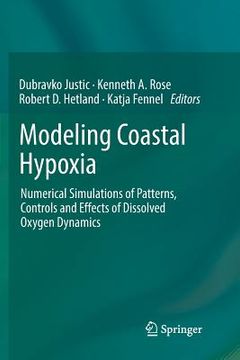
portada Modeling Coastal Hypoxia: Numerical Simulations of Patterns, Controls and Effects of Dissolved Oxygen Dynamics
Type
Physical Book
Publisher
Language
English
Pages
433
Format
Paperback
Dimensions
23.4 x 15.6 x 2.3 cm
Weight
0.62 kg.
ISBN13
9783319854274

Modeling Coastal Hypoxia: Numerical Simulations of Patterns, Controls and Effects of Dissolved Oxygen Dynamics

Justic, Dubravko ; Rose, Kenneth A. ; Hetland, Robert D. (Author) · Springer · Paperback

Modeling Coastal Hypoxia: Numerical Simulations of Patterns, Controls and Effects of Dissolved Oxygen Dynamics - Justic, Dubravko ; Rose, Kenneth A. ; Hetland, Robert D.

Cheaper New Book Imported to Taiwan
Delivery: 15 Sep - 28 Sep Shipping: 12 to 16 business days.
NT$ 7,292
Faster New Book Imported to Taiwan
Delivery: 03 Sep - 11 Sep Shipping: 4 to 5 business days.
NT$ 9,111
NT$ 7,292

Synopsis "Modeling Coastal Hypoxia: Numerical Simulations of Patterns, Controls and Effects of Dissolved Oxygen Dynamics"

This book provides a snapshot of representative modeling analyses of coastal hypoxia and its effects. Hypoxia refers to conditions in the water column where dissolved oxygen falls below levels that can support most metazoan marine life (i.e., 2 mg O2 l-1). The number of hypoxic zones has been increasing at an exponential rate since the 1960s; there are currently more than 600 documented hypoxic zones in the estuarine and coastal waters worldwide. Hypoxia develops as a synergistic product of many physical and biological factors that affect the balance of dissolved oxygen in seawater, including temperature, solar radiation, wind, freshwater discharge, nutrient supply, and the production and decay of organic matter. A number of modeling approaches have been increasingly used in hypoxia research, along with the more traditional observational and experimental studies. Modeling is necessary because of rapidly changing coastal circulation and stratification patterns that affect hypoxia, the large spatial extent over which hypoxia develops, and limitations on our capabilities to directly measure hypoxia over large spatial and temporal scales. This book consists of 15 chapters that are broadly organized around three main topics: (1) Modeling of the physical controls on hypoxia, (2) Modeling of biogeochemical controls and feedbacks, and, (3) Modeling of the ecological effects of hypoxia. The final chapter is a synthesis chapter that draws generalities from the earlier chapters, highlights strengths and weaknesses of the current state-of-the-art modeling, and offers recommendations on future directions.

Customers reviews

Frequently Asked Questions about the Book

All books in our catalog are Original.
The book is written in English.
The binding of this edition is Paperback.

Questions and Answers about the Book

Do you have a question about the book? Login to be able to add your own question.

Opinions about Bookdelivery

More customer reviews