Tracked shipping to Taiwan with premium packaging for just NT$300 

Ship to
Taiwan
0
  • argentina
  • chile
  • colombia
  • españa
  • méxico
  • perú
  • estados unidos
  • internacional

Select your country

Americas

Europe

Rest of the world

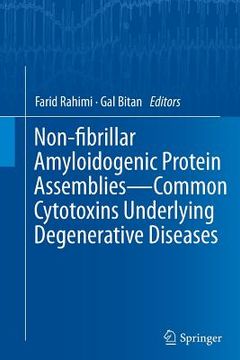
portada Non-Fibrillar Amyloidogenic Protein Assemblies - Common Cytotoxins Underlying Degenerative Diseases
Type
Physical Book
Publisher
Language
English
Pages
568
Format
Paperback
Dimensions
23.4 x 15.6 x 3.0 cm
Weight
0.79 kg.
ISBN13
9789400798953

Non-Fibrillar Amyloidogenic Protein Assemblies - Common Cytotoxins Underlying Degenerative Diseases

Rahimi, Farid ; Bitan, Gal (Author) · Springer · Paperback

Non-Fibrillar Amyloidogenic Protein Assemblies - Common Cytotoxins Underlying Degenerative Diseases - Rahimi, Farid ; Bitan, Gal

Cheaper New Book Imported to Taiwan
Delivery: 27 Jul - 07 Aug Shipping: 13 to 17 business days.
NT$ 6,346
Faster New Book Imported to Taiwan
Delivery: 15 Jul - 23 Jul Shipping: 5 to 6 business days.
NT$ 8,899
NT$ 6,346

Synopsis "Non-Fibrillar Amyloidogenic Protein Assemblies - Common Cytotoxins Underlying Degenerative Diseases"

Amyloid-forming proteins are implicated in over 30 human diseases. The proteins involved in each disease have unrelated sequences and dissimilar native structures, but they all undergo conformational alterations to form fibrillar polymers. The fibrillar assemblies accumulate progressively into disease-specific lesions in vivo. Substantial evidence suggests these lesions are the end state of aberrant protein folding whereas the actual disease-causing culprits likely are soluble, non-fibrillar assemblies preceding the aggregates. The non-fibrillar protein assemblies range from small, low-order oligomers to spherical, annular, and protofibrillar species. Oligomeric species are believed to mediate various pathogenic mechanisms that lead to cellular dysfunction, cytotoxicity, and cell loss, eventuating in disease-specific degeneration and systemic morbidity. The particular pathologies thus are determined by the afflicted cell types, organs, systems, and the proteins involved. Evidence suggests that the oligomeric species may share structural features and possibly common mechanisms of action. In many cases, the structure-function interrelationships amongst the various protein assemblies described in vitro are still elusive. Deciphering these intricate structure-function correlations will help understanding a complex array of pathogenic mechanisms, some of which may be common across different diseases albeit affecting different cell types and systems.

Customers reviews

Frequently Asked Questions about the Book

All books in our catalog are Original.
The book is written in English.
The binding of this edition is Paperback.

Questions and Answers about the Book

Do you have a question about the book? Login to be able to add your own question.

Opinions about Bookdelivery

More customer reviews