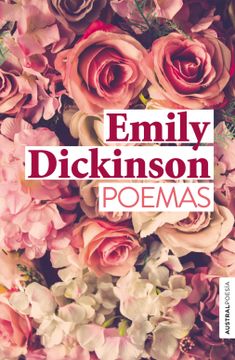
Emily Elizabeth Dickinson (Amherst, Massachusetts, December 10, 1830 - Amherst, May 15, 1886) was an American poetess, her passionate poetry has placed her in the small pantheon of fundamental American poets alongside Edgar Allan Poe, Ralph Waldo Emerson, and Walt Whitman
Dickinson came from a prestigious family and had strong ties to her community, though she spent much of her life secluded in her home. After studying for seven years at Amherst Academy, she briefly attended the Mount Holyoke Female Seminary before returning to her family home in Amherst
In the privacy of her home, Dickinson was a prolific poet; however, during her lifetime, not even a dozen of her nearly 1800 poems were published. The work published during her lifetime was significantly altered by editors to conform to the poetic rules and conventions of the time. Nevertheless, Dickinson's poems are unique compared to those of her contemporaries: they contain short lines, generally lack titles, feature imperfect consonant rhymes [half rhyme], and unconventional punctuation. Many of her poems focus on themes related to death and immortality, two themes also recurrent in the letters she sent to her friends
Dickinson's acquaintances probably knew of her writings but it was not until after her death, in 1886, when Lavinia, Dickinson's younger sister, discovered the poems Emily had kept and the breadth of her work became evident. Her first collection of poetry was published in 1890 by well-known figures such as Thomas Wentworth Higginson and Mabel Loomis Todd, although they significantly altered the originals. Scholar Thomas H. Johnson published a complete collection of Dickinson's poetry in 1955, the first of her poetry, mostly unchanged. Despite having a critical and skeptical reception between the late 19th and early 20th centuries, Emily Dickinson is almost universally considered one of the most important American poets of all time.
See more
See less