你好! Tracked shipping to Taiwan with premium packaging for just NT$300 

Ship to
Taiwan
0
  • argentina
  • chile
  • colombia
  • españa
  • méxico
  • perú
  • estados unidos
  • internacional

Select your country

Americas

Europe

Rest of the world

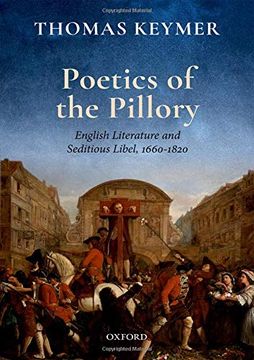
portada Poetics of the Pillory: English Literature and Seditious Libel, 1660-1820 (Clarendon Lectures in English)
Type
Physical Book
Year
2019
Language
English
Pages
352
Format
Hardcover
ISBN13
9780198744498

Poetics of the Pillory: English Literature and Seditious Libel, 1660-1820 (Clarendon Lectures in English)

Thomas Keymer (Author) · Oxford University Press · Hardcover

Poetics of the Pillory: English Literature and Seditious Libel, 1660-1820 (Clarendon Lectures in English) - Thomas Keymer

New Book Imported to Taiwan
Delivery: 27 Aug - 07 Sep Shipping: 5 to 6 business days.
NT$ 1,648
NT$ 1,648

Synopsis "Poetics of the Pillory: English Literature and Seditious Libel, 1660-1820 (Clarendon Lectures in English) "

On the lapse of the Licensing Act in 1695, Thomas Macaulay wrote in his History of England, 'English literature was emancipated, and emancipated for ever, from the control of the government'. It's certainly true that the system of prior restraint enshrined in this Restoration measure was now at an end, at least for print. Yet the same cannot be said of government control, which came to operate instead by means of post-publication retribution, not pre-publication licensing, notably for the common-law offence of seditious libel. For many of the authors affected, from Defoe to Cobbett, this new regime was a greater constraint on expression than the old, not least for its alarming unpredictability, and for the spectacular punishment--the pillory--that was sometimes entailed. Yet we may also see the constraint as an energizing force. Throughout the eighteenth century and into the Romantic period, writers developed and refined ingenious techniques for communicating dissident or otherwise contentious meanings while rendering the meanings deniable. As a work of both history and criticism, this book traces the rise and fall of seditious libel prosecution, and with it the theatre of the pillory, while arguing that the period's characteristic forms of literary complexity--ambiguity, ellipsis, indirection, irony--may be traced to the persistence of censorship in the post-licensing world. The argument proceeds through case studies of major poets and prose writers including Dryden, Defoe, Pope, Fielding, Johnson, and Southey, and also calls attention to numerous little-known satires and libels across the extended period.

Customers reviews

Frequently Asked Questions about the Book

All books in our catalog are Original.
The book is written in English.
The binding of this edition is Hardcover.

Questions and Answers about the Book

Do you have a question about the book? Login to be able to add your own question.

Opinions about Bookdelivery

More customer reviews