你好! Shipping to Taiwan with premium packaging for just NT$300 

Ship to
Taiwan
0
  • argentina
  • chile
  • colombia
  • españa
  • méxico
  • perú
  • estados unidos
  • internacional

Select your country

Americas

Europe

Rest of the world

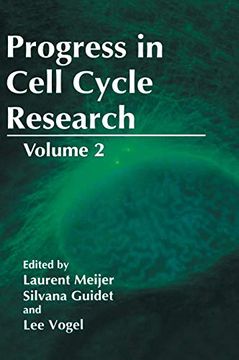
portada Progress in Cell Cycle Research
Type
Physical Book
Publisher
Year
1996
Language
English
Pages
284
Format
Hardcover
ISBN
0306455072
ISBN13
9780306455070
Edition No.
1996
Categories

Progress in Cell Cycle Research

Laurent Meijer (Author) · Springer · Hardcover

Progress in Cell Cycle Research - Laurent Meijer

Cheaper New Book Imported to Taiwan
Delivery: 23 Sep - 06 Oct Shipping: 12 to 16 business days.
NT$ 5,059
Faster New Book Imported to Taiwan
Delivery: 11 Sep - 21 Sep Shipping: 4 to 5 business days.
NT$ 6,620
NT$ 5,059

Synopsis "Progress in Cell Cycle Research "

Now in its second year, Progress in Cell Cycle Research was conceived to serve as an up to date introduction to various aspects of the cell division cycle. Although an annual review in any field of scientific investigation can never be as current as desired, especially in the cell cycle field, we hope that this volume will be helpful to students, to recent graduates considering a de1liation in subject and to investigators at the fringe of the cell cycle field wishing to bridge frontiers. An instructive approach to many subjects in biology is often to make comparisons between evolutionary distant organisms. If one is willing to accept that yeast represent a model primitive eukaryote, then it is possible to make some interesting comparisons of cell cycle control mechanisms between mammals and our little unicellular cousins. By and large unicellular organisms have no need for intracellular communication. With the exception of the mating phenomenon in S. cerevisiae and perhaps some nutritional sensing mechanisms, cellular division of yeast proceeds with complete disregard for neighbourly communication. Multicellular organisms on the other hand, depend entirely on intracellular communication to maintain structural integrity. Consequently, elaborate networks have evolved to either prevent or promote appropriate cell division in multicellular organisms. Yet, as described in chapter two the rudimentary mechanisms for fine tuning the cell division cycle in higher eukaryotes are already apparent in yeast.

Customers reviews

Frequently Asked Questions about the Book

All books in our catalog are Original.
The book is written in English.
The binding of this edition is Hardcover.

Questions and Answers about the Book

Do you have a question about the book? Login to be able to add your own question.

Opinions about Bookdelivery

More customer reviews