Tracked shipping to Taiwan with premium packaging for just NT$300 

Ship to
Taiwan
0
  • argentina
  • chile
  • colombia
  • españa
  • méxico
  • perú
  • estados unidos
  • internacional

Select your country

Americas

Europe

Rest of the world

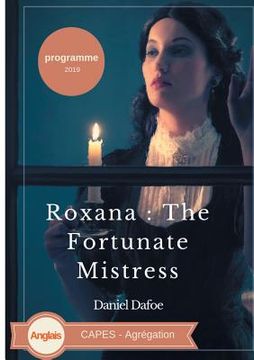
portada Roxana: The Fortunate Mistress: CAPES Agrégation Anglais
Type
Physical Book
Language
English
Pages
572
Format
Paperback
Dimensions
21.0 x 14.8 x 3.2 cm
Weight
0.74 kg.
ISBN13
9782322163090

Roxana: The Fortunate Mistress: CAPES Agrégation Anglais

Daniel Defoe (Author) · Books on Demand · Paperback

Roxana: The Fortunate Mistress: CAPES Agrégation Anglais - Daniel Defoe

Cheaper New Book Imported to Taiwan
Delivery: 24 Jul - 03 Aug Shipping: 12 to 13 business days.
NT$ 1,026
Faster New Book Imported to Taiwan
Delivery: 14 Jul - 22 Jul Shipping: 4 to 5 business days.
NT$ 1,761
NT$ 1,026

Synopsis "Roxana: The Fortunate Mistress: CAPES Agrégation Anglais"

Roxana: The Fortunate Mistress (full title: The Fortunate Mistress: Or, A History of the Life and Vast Variety of Fortunes of Mademoiselle de Beleau, Afterwards Called the Countess de Wintselsheim, in Germany, Being the Person known by the Name of the Lady Roxana, in the Time of King Charles II) is a 1724 novel by Daniel Defoe. The novel examines the possibility of eighteenth-century women owning their own estate despite a patriarchal society, as with Roxana's celebrated claim that "the Marriage Contract is ... nothing but giving up Liberty, Estate, Authority, and everything, to the Man".The novel further draws attention to the incompatibility between sexual freedom and freedom from motherhood: Roxana becomes pregnant many times due to her sexual exploits, and it is one of her children, Susan, who come back to expose her, years later, near the novel's close, helping to precipitate her flight abroad, subsequent loss of wealth, and (ambiguous) repentance. The character of Roxana can be described as a proto-feminist because she carries out her actions of prostitution for her own ends of freedom but before a feminist ideology was fully formed, (though Defoe also works to undercut the radicalism of her position). The book also explores the clash of values between the Restoration court and the middle-class. Roxana also discusses the issues of truth and deceit. As the text is a first-person narration and written to simulate a real first-hand account of a woman, first comes the issue of subjectivity, but also the underlying lie as to the veracity of the text. The reader can only trust in Roxana to give us a true account of her story, but as she often lies to other characters in the book, and even to herself, she is not a reliable narrator. Furthermore, the whole construction of her character is made on lies and disguises. Her name, or names, are not mentioned until the end of the novel, so even the most basic aspect of her identity - her name - is a mystery for the majority
Daniel Defoe
  (Author)
View Author's Page
English writer and journalist, Daniel Defoe is mainly known for his novel Robinson Crusoe (1719), though he also stood out for his role in the development of the press and for his political and social essays

Defoe left his studies to become a discreet businessman, whose activities were not entirely profitable, even receiving prison time for his debts

From 1695, after several years of exile due to his political ideology, he starts a new business dedicated to tiles and bricks which begins to work, providing his family—he was married and had six children—with greater economic stability

However, his political activism leads him to publish several essays or pamphlets that cost him days of imprisonment and the pillory. After returning to jail, Defoe begins working from a magazine supporting political factions of the government, participating in the English secret services

In 1719 he publishes his great novel, Robinson Crusoe, which allows him to launch into a literary career marked by successes such as The Adventures of Captain Singleton, A Journal of the Plague Year, or Moll Flanders. His popularity grew and his influence on subsequent generations of writers by enhancing the novelistic genre is notable

Despite all his success and his connections with the government, Defoe never achieved stable economic solvency for long. His death in 1731 occurred while fleeing from new creditors
See more
See less

Customers reviews

Frequently Asked Questions about the Book

All books in our catalog are Original.
The book is written in English.
The binding of this edition is Paperback.

Questions and Answers about the Book

Do you have a question about the book? Login to be able to add your own question.

Opinions about Bookdelivery

More customer reviews