你好! Shipping to Taiwan with premium packaging for just NT$300 

Ship to
Taiwan
0
  • argentina
  • chile
  • colombia
  • españa
  • méxico
  • perú
  • estados unidos
  • internacional

Select your country

Americas

Europe

Rest of the world

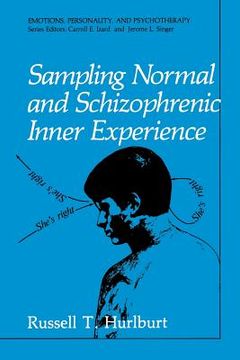
portada Sampling Normal and Schizophrenic Inner Experience
Type
Physical Book
Publisher
Language
English
Pages
306
Format
Paperback
Dimensions
22.9x15.2x1.7 cm
Weight
0.42 kg.
ISBN13
9781475702910

Sampling Normal and Schizophrenic Inner Experience

Russell T. Hurlburt (Author) · Springer · Paperback

Sampling Normal and Schizophrenic Inner Experience - Hurlburt, Russell T.

Cheaper New Book Imported to Taiwan
Delivery: 23 Sep - 06 Oct Shipping: 12 to 16 business days.
NT$ 3,406
Faster New Book Imported to Taiwan
Delivery: 11 Sep - 21 Sep Shipping: 4 to 5 business days.
NT$ 4,636
NT$ 3,406

Synopsis "Sampling Normal and Schizophrenic Inner Experience"

What are the basic data of psychology? In the early years of experimental psychology, they were reports of ''brighter'' or "heavier" or other esti- mates of the magnitude of differences between the sensory stimuli pre- sented in psychophysical experiments. Introspective accounts of the ex- perience of seeing colored lights or shapes were important sources of psychological data in the laboratories of Cornell, Harvard, Leipzig, or Wiirzburg around the tum of the century. In 1910, John B. Watson called for the objectification of psychological research, even parodying the typical subjective introspective reports that emerged from Edward Bradford Titchener's laboratory. For almost fifty years psychologists largely eschewed subjective information and turned their attention to observable behavior. Rats running mazes or pigeons pecking away on varied schedules of reinforcement became the scientific prototypes for those psychologists who viewed themselves as "doing science. " Psychoanalysts and clinical psychologists sustained interest in the personal reports of patients or clients as valuable sources of data for research. For the psychologists, questionnaires and projective tests that allowed for quantitative analysis and psychometrics seemed to circum- vent the problem of subjectivity. Sigmund Freud's introduction of on- going free association became the basis for psychoanalysis as a therapy and as a means of learning about human psychology. Slips-of-the- tongue, thought intrusions, fantasies, hesitations, and sudden emo- tional expressions became the data employed by psychoanalysts in for- mulating hypotheses about resistance, memory, transference, and a host of presumed human wishes and conflicts.

Customers reviews

Frequently Asked Questions about the Book

All books in our catalog are Original.
The book is written in English.
The binding of this edition is Paperback.

Questions and Answers about the Book

Do you have a question about the book? Login to be able to add your own question.

Opinions about Bookdelivery

More customer reviews