你好! Shipping to Taiwan with premium packaging for just NT$300 

Ship to
Taiwan
0
  • argentina
  • chile
  • colombia
  • españa
  • méxico
  • perú
  • estados unidos
  • internacional

Select your country

Americas

Europe

Rest of the world

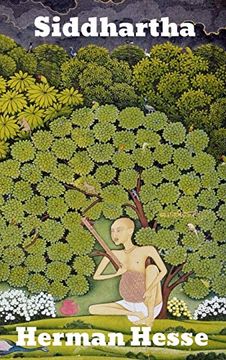
portada Siddhartha
Type
Physical Book
Publisher
Year
2020
Language
English
Pages
118
Format
Hardcover
Dimensions
22.9x15.2x0.8 cm
Weight
0.33 kg.
ISBN13
9781774414491

Siddhartha

Hermann Hesse (Author) · Binker North · Hardcover

Siddhartha - Hermann Hesse

New Book Imported to Taiwan
Delivery: 30 Sep - 08 Oct Shipping: 6 to 7 business days.
NT$ 875
NT$ 875

Synopsis "Siddhartha "

Siddhartha is a novel by Hermann Hesse that deals with the spiritual journey of self-discovery of a man named Siddhartha during the time of the Gautama Buddha. The book, Hesse's ninth novel, was written in German, in a simple, lyrical style. It was published in the U.S. in 1951 and became influential during the 1960s. Hesse dedicated the first part of it to Romain Rolland and the second part to Wilhelm Gundert, his cousin.The word Siddhartha is made up of two words in Sanskrit language, siddha (achieved) + artha (what was searched for), which together means "he who has found meaning (of existence)" or "he who has attained his goals". In fact, the Buddha's own name, before his renunciation, was Siddhartha Gautama, Prince of Kapilavastu. In this book, the Buddha is referred to as "Gotama". The story takes place in the Nepalese district of Kapilavastu. Siddhartha decides to leave behind his home in the hope of gaining spiritual illumination by becoming an ascetic wandering beggar of the Shramanas. Joined by his best friend, Govinda, Siddhartha fasts, becomes homeless, renounces all personal possessions, and intensely meditates, eventually seeking and personally speaking with Gautama, the famous Buddha, or Enlightened One. Afterward, both Siddhartha and Govinda acknowledge the elegance of the Buddha's teachings. Although Govinda hastily joins the Buddha's order, Siddhartha does not follow, claiming that the Buddha's philosophy, though supremely wise, does not account for the necessarily distinct experiences of each person. He argues that the individual seeks an absolutely unique, personal meaning that cannot be presented to him by a teacher. He thus resolves to carry on his quest alone. Siddhartha crosses a river and the generous ferryman, whom Siddhartha is unable to pay, merrily predicts that Siddhartha will return to the river later to compensate him in some way. Venturing onward toward city life, Siddhartha discovers Kamala, the most beautiful woman he has yet seen. Kamala, a courtesan, notes Siddhartha's handsome appearance and fast wit, telling him that he must become wealthy to win her affections so that she may teach him the art of love. Although Siddhartha despised materialistic pursuits as a Shramana, he agrees now to Kamala's suggestions. She directs him to the employ of Kamaswami, a local businessman, and insists that he have Kamaswami treat him as an equal rather than an underling
Hermann Hesse
  (Author)
View Author's Page
Herman Hesse was born in 1877 in Calw. He followed professions as diverse as a clergyman and a mechanic, but with the publication of his first novel, Peter Camenzind (1904), he managed to establish himself as a writer. His literary work placed him among the most important authors of the 20th century. His most notable titles are: Demian (1919), Siddhartha (1922), Steppenwolf (1927), and The Glass Bead Game (1943). Among many other distinctions, he received the Nobel Prize in Literature in 1946. He died in 1962, at the age of 85 in Montagnola.
See more
See less

Customers reviews

Frequently Asked Questions about the Book

All books in our catalog are Original.
The book is written in English.
The binding of this edition is Hardcover.

Questions and Answers about the Book

Do you have a question about the book? Login to be able to add your own question.

Opinions about Bookdelivery

More customer reviews