Tracked shipping to Taiwan with premium packaging for just NT$300 

Ship to
Taiwan
0
  • argentina
  • chile
  • colombia
  • españa
  • méxico
  • perú
  • estados unidos
  • internacional

Select your country

Americas

Europe

Rest of the world

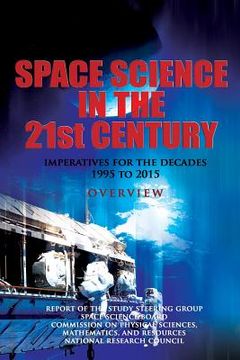
portada Space Science in the Twenty-First Century: Imperatives for the Decades 1995 to 2015: Overview
Type
Physical Book
Publisher
Language
English
Pages
108
Format
Paperback
Dimensions
22.9 x 15.2 x 0.6 cm
Weight
0.15 kg.
ISBN13
9781478338543
Categories

Space Science in the Twenty-First Century: Imperatives for the Decades 1995 to 2015: Overview

Space Science Board (Author) · Commission On Physical Scienc Resources (Author) · Createspace · Paperback

Space Science in the Twenty-First Century: Imperatives for the Decades 1995 to 2015: Overview - Board, Space Science ; Resources, Commission On Physical Scienc ; Council, National Research

New Book Imported to Taiwan
Delivery: 01 Sep - 14 Sep Shipping: 17 to 21 business days.
NT$ 872
NT$ 872

Synopsis "Space Science in the Twenty-First Century: Imperatives for the Decades 1995 to 2015: Overview"

The past quarter century of space science has been extraordinarily productive. The United States has held the lead in space science during most of these years, exploring new worlds, discovering new phenomena in space, and providing new ways to observe and predict changes in the global environment. The national space science program has amply fulfilled the objective of the National Aeronautics and Space Act of 1958 to extend "human knowledge of the Earth and of phenomena in the atmosphere and in space." Moreover, it has contributed substantially to other objectives set forth in the act, including the development of space technology, the preservation of U.S. leadership in space, and the fostering of international cooperation. National investment in space science has produced a treasure of trained people and facilities that can continue to be productive far into the future. It is a perishable treasure, however, and is eroding rapidly with the present lack of scientific missions and the aging of academic facilities. For the past 30 years, scientific investigation has been neither the only objective of the space program of the United States, nor even the dominant one. The Apollo project and the development of the Space Transportation Systems, and more recently, of the Space Station were not primarily designed to respond to requirements set by the various disciplines of space science. Instead, establishing a human presence in space and accomplishment of large engineering projects for their own sake have driven a major part of our space program since the establishment of NASA in 1958. The steering group for this study recommends that the present ordering of priorities in the national space program be changed. The steering group proposes that, as the nation considers its future in space, the advance of science and its applications to human welfare be adopted and implemented as an objective no less central to the space program of the United States than any other, such as the capability of expanding man's presence in space.

Customers reviews

Frequently Asked Questions about the Book

All books in our catalog are Original.
The book is written in English.
The binding of this edition is Paperback.

Questions and Answers about the Book

Do you have a question about the book? Login to be able to add your own question.

Opinions about Bookdelivery

More customer reviews