Tracked shipping to Taiwan with premium packaging for just NT$300 

Ship to
Taiwan
0
  • argentina
  • chile
  • colombia
  • españa
  • méxico
  • perú
  • estados unidos
  • internacional

Select your country

Americas

Europe

Rest of the world

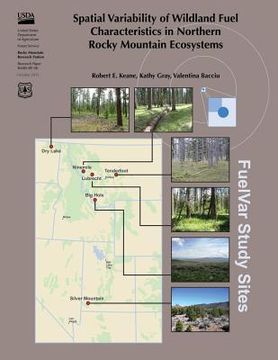
portada Spatial Variability of Wildland Fuel Characteristics in Northern Rocky Mountain Ecosystems
Type
Physical Book
Author
Publisher
Language
English
Pages
62
Format
Paperback
Dimensions
27.9 x 21.6 x 0.3 cm
Weight
0.17 kg.
ISBN13
9781507666951

Spatial Variability of Wildland Fuel Characteristics in Northern Rocky Mountain Ecosystems

Keane (Author) · Createspace · Paperback

Spatial Variability of Wildland Fuel Characteristics in Northern Rocky Mountain Ecosystems - Keane

New Book Imported to Taiwan
Delivery: 01 Sep - 14 Sep Shipping: 17 to 21 business days.
NT$ 923
NT$ 923

Synopsis "Spatial Variability of Wildland Fuel Characteristics in Northern Rocky Mountain Ecosystems"

We investigated the spatial variability of a number of wildland fuel characteristics for the major fuel components found in six common northern Rocky Mountain ecosystems. Surface fuel characteristics of loading, particle density, bulk density, and mineral content were measured for eight fuel components-four downed dead woody fuel size classes (1, 10, 100, 1000 hr), duff, litter, shrub, and herb-on nested plots located within sampling grids to describe their variability across spatial scales. We also sampled canopy bulk density, biomass, and cover for each plot in the grid. The spatial distribution and variability of surface and canopy fuel characteristics are described using the variance, spatial autocorrelation, semi-variograms, and Moran's I. We found that all fuels had high variability in loading (two to three times the mean), and this variability increased with the size of fuel particle. We also found that fuel components varied at different scales, with fine fuels varying at scales of 1 to 5 m, coarse fuels at 10 to 150 m, and canopy fuels at 100 to 500 m. Findings and data from this study can be used to sample, describe, and map fuel characteristics, such as loading, at the appropriate spatial scales to accommodate the next generation of fire behavior prediction models.

Customers reviews

Frequently Asked Questions about the Book

All books in our catalog are Original.
The book is written in English.
The binding of this edition is Paperback.

Questions and Answers about the Book

Do you have a question about the book? Login to be able to add your own question.

Opinions about Bookdelivery

More customer reviews