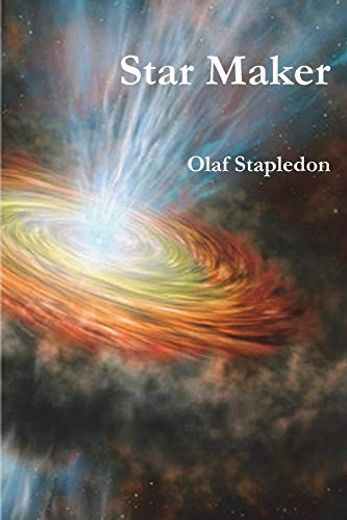
A contemporary Earthman joins a community of explorers who travel to the farthest reaches of the universe, seeking traces of intelligence. Along the way, they encounter nautiloid water beings, races of hyperspiders and hyperfish, composite group intelligences, plantlike creatures, and other strange life forms. Their dramatic voyage unfolds against a backdrop of life-and-death struggles on a cosmic scale.Star Maker is the science fiction classic about a human who is transported out of his body and finds himself able to explore space and other planets. The story describes a history of life in the universe and tackles themes such as the essence of life, of birth, decay and death, and the relationship between creation and creator. A pervading theme is the progressive unity between different civilizations. Some of the elements and themes prefigure later fiction concerning genetic engineering and alien life forms. Arthur C. Clarke considered Star Maker to be one of the finest works of science fiction ever written.
Olaf Stapledon (1886–1950) fue un escritor y filósofo británico, reconocido como una de las figuras más influyentes en la ciencia ficción del siglo XX. Aunque no fue autor de cómics, su obra ha tenido un profundo impacto en múltiples medios narrativos, incluyendo la literatura gráfica. Stapledon se destacó por su enfoque especulativo y filosófico, explorando temas como la evolución de la humanidad, la conciencia colectiva y el destino del universo.
Su obra más famosa, Last and First Men (1930), presenta una historia futurista que abarca miles de millones de años y múltiples especies humanas, proponiendo una visión ambiciosa y poco convencional del futuro. Otro de sus libros importantes, Star Maker (1937), profundiza en la idea de una inteligencia cósmica y la conexión entre todas las formas de vida del universo. Estos trabajos influyeron en autores posteriores de ciencia ficción, como Arthur C. Clarke y Stanisław Lem.
Stapledon también abordó cuestiones éticas, sociales y espirituales en sus escritos, lo que le dio a su obra un carácter reflexivo y trascendental. Su estilo puede resultar denso, pero es ampliamente valorado por su originalidad y profundidad intelectual. Hoy en día, sigue siendo una referencia clave para quienes buscan una ciencia ficción más filosófica y visionaria.