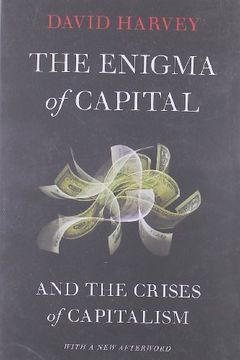
the enigma of capital,and the crises of capitalism
David Harvey
Synopsis "the enigma of capital,and the crises of capitalism"
For over forty years, David Harvey has been one of the world's most trenchant and critical analysts of capitalist development. In The Enigma of Capital, he delivers an impassioned account of how unchecked neoliberalism produced the system-wide crisis that now engulfs the world. Beginning in the 1970s, profitability pressures led the capitalist class in advanced countries to shift away from investment in industrial production at home toward the higher returns that financial products promised. Accompanying this was a shift towards privatization, an absolute decline in the bargaining power of labor, and the dispersion of production throughout the developing world. The decades-long and ongoing decline in wages that accompanied this turn produced a dilemma: how can goods--especially real estate--sell at the same rate as before if workers are making less in relative terms? The answer was a huge expansion of credit that fueled the explosive growth of both the financial industry and the real estate market. When one key market collapsed--real estate--the other one did as well, and social devastation resulted. Harvey places today's crisis in the broadest possible context: the historical development of global capitalism itself from the industrial era onward. Moving deftly between this history and the unfolding of the current crisis, he concentrates on how such crises both devastate workers and create openings for challenging the system's legitimacy. The battle now will be between the still-powerful forces that want to reconstitute the system of yesterday and those that want to replace it with one that prizes social justice and economic equality. The new afterword focuses on the continuing impact of the crisis and the response to it in 2010.
David Wacław Harvey (nacido el 7 de diciembre de 1935 en Gillingham, Reino Unido) es un geógrafo marxista, teórico social y profesor distinguido cuya obra ha redefinido cómo se entiende el capitalismo, las ciudades y el espacio en las ciencias sociales. Estudió en la Universidad de Cambridge y desarrolló una carrera académica en universidades como Bristol, Johns Hopkins, Oxford y la City University of New York. Su trabajo inicial en geografía cuantitativa evolucionó hacia una crítica materialista del capitalismo, articulando conceptos como la producción del espacio, la acumulación desigual y la “compresión tiempo-espacial”. Entre sus libros más influyentes están Social Justice and the City y The Condition of Postmodernity, este último señalado como una de las obras no-ficción más relevantes del último medio siglo.
Su libro Los límites del capital (The Limits to Capital) es un tratado fundamental que expande el pensamiento de Marx al integrar las dimensiones espaciales y territoriales del capital, mostrando cómo las crisis económicas están imbricadas en la producción y reorganización del espacio. Harvey ha sido ampliamente reconocido en geografía y teoría social con distinciones como el Vautrin Lud International Geography Prize, la Medalla de Oro Anders Retzius y el Outstanding Contributor Award de la Association of American Geographers, reflejo de su impacto duradero en múltiples disciplinas.