
Ship to
Taiwan
Select your location
Shipping costs will be calculated based on this address throughout the site.
Shipping costs will be calculated based on this address throughout the site.
Select your country
Americas
Argentina
Brazil
Canada
Chile
Colombia
Costa Rica
Dominican Republic
Ecuador
El Salvador
Mexico
Peru
U.S.A.
Uruguay
Europe
Austria
Belgium
Croatia
Czech Republic
Denmark
Finland
France
Germany
Greece
Hungary
Ireland
Italy
Latvia
Malta
Netherlands
Norway
Poland
Portugal
Serbia
Slovakia
Slovenia
Spain
Sweden
Switzerland
United Kingdom
Rest of the world
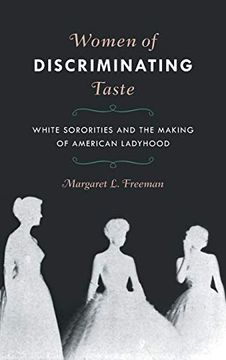
Women of Discriminating Taste: White Sororities and the Making of American Ladyhood
Margaret L. Freeman
Women of Discriminating Taste: White Sororities and the Making of American Ladyhood
Margaret L. Freeman (Author) · University Of Georgia Press · Hardcover
Women of Discriminating Taste: White Sororities and the Making of American Ladyhood
Margaret L. Freeman
Women of Discriminating Taste examines the role of historically white sororities in the shaping of white womanhood in the twentieth century. As national women&;s organizations, sororities have long held power on college campuses and in American life. Yet the groups also have always been conservative in nature and inherently discriminatory, selecting new members on the basis of social class, religion, race, or physical attractiveness. In the early twentieth century, sororities filled a niche on campuses as they purported to prepare college women for ladyhood. Sorority training led members to comport themselves as hyperfeminine, heterosocially inclined, traditionally minded women following a model largely premised on the mythical image of the southern lady. Although many sororities were founded at non-southern schools and also maintained membership strongholds in many non-southern states, the groups adhered to a decidedly southern aesthetic&;a modernized version of Lost Cause ideology&;in their social training to deploy a conservative agenda.
Margaret L. Freeman researched sorority archives, sorority-related materials in student organizations, as well as dean of women&;s, student affairs, and president&;s office records collections for historical data that show how white southerners repeatedly called upon the image of the southern lady to support southern racial hierarchies. Her research also demonstrates how this image could be easily exported for similar uses in other areas of the United States that shared white southerners&; concerns over changing social demographics and racial discord. By revealing national sororities as significant players in the grassroots conservative movement of the twentieth century, Freeman illuminates the history of contemporary sororities&; difficult campus relationships and their continuing legacy of discriminatory behavior and conservative rhetoric.
Do you have a question about the book? Login to be able to add your own question.