Tracked shipping to Taiwan with premium packaging for just NT$300 

Ship to
Taiwan
0
  • argentina
  • chile
  • colombia
  • españa
  • méxico
  • perú
  • estados unidos
  • internacional

Select your country

Americas

Europe

Rest of the world

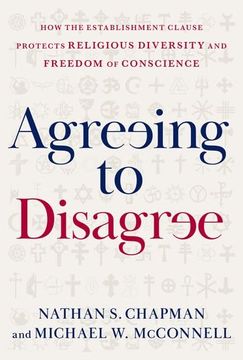
portada Agreeing to Disagree: How the Establishment Clause Protects Religious Diversity and Freedom of Conscience (Inalienable Rights)
Type
Physical Book
Language
English
Pages
240
Format
Hardcover
ISBN13
9780195304664

Agreeing to Disagree: How the Establishment Clause Protects Religious Diversity and Freedom of Conscience (Inalienable Rights)

Nathan S. Chapman; Michael W. Mcconnell (Author) · Oxford University Press · Hardcover

Agreeing to Disagree: How the Establishment Clause Protects Religious Diversity and Freedom of Conscience (Inalienable Rights) - Nathan S. Chapman; Michael W. Mcconnell

New Book Imported to Taiwan
Delivery: 17 Jul - 24 Jul Shipping: 3 to 3 business days.
NT$ 948
NT$ 948

Synopsis "Agreeing to Disagree: How the Establishment Clause Protects Religious Diversity and Freedom of Conscience (Inalienable Rights) "

In one of the most thorough accounts of the Establishment Clause of the First Amendment, Nathan S. Chapman and Michael W. McConnell provide an insightful overview of the legal history and meaning of the clause, as well as its value for promoting equal religious freedom and diversity in contemporary America. The Establishment Clause of the First Amendment, "Congress shall make no law respecting an establishment of religion", may be the most contentious and misunderstood provision of the entire U.S. Constitution. It lies at the heart of America's culture wars. But what, exactly, is an "establishment of religion"? And what is a law "respecting" it? Many commentators reduce the clause to "the separation of church and state." This implies that church and state are at odds, that the public sphere must be secular, and that the Establishment Clause is in tension with the Free Exercise of Religion Clause. All of these implications misconstrue the Establishment Clause's original purpose and enduring value for a religiously pluralistic society. The clause facilitates religious diversity and guarantees equality of religious freedom by prohibiting the government from coercing or inducing citizens to change their religious beliefs and practices. In Agreeing to Disagree, Nathan S. Chapman and Michael W. McConnell detail the theological, political, and philosophical underpinnings of the Establishment Clause, state disestablishment, and the disestablishment norms applied to the states by the Fourteenth Amendment. Americans in the early Republic were intimately acquainted with the laws used in England, the colonies, and early states to enforce religious uniformity. The Establishment Clause was understood to prohibit the government from incentivizing such uniformity. Chapman and McConnell show how the U.S. Supreme Court has largely implemented these purposes in cases addressing prayer in school, state funding of religious schools, religious symbols on public property, and limits on religious accommodations. In one of the most thorough accounts of the Establishment Clause, Chapman and McConnell argue that the clause is best understood as a constitutional commitment for Americans to agree to disagree about matters of faith.

Customers reviews

Frequently Asked Questions about the Book

All books in our catalog are Original.
The book is written in English.
The binding of this edition is Hardcover.

Questions and Answers about the Book

Do you have a question about the book? Login to be able to add your own question.

Opinions about Bookdelivery

More customer reviews