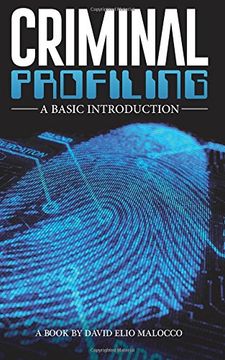
At last we have a good student introduction to the basics of criminal profiling from criminologist David Malocco, the best-selling author of Forensic Science: Crime Scene Analysis. The book is packed with information on all aspects of profiling and is completed with page upon page of references in the Bibliography section, a useful tool for any student. The book covers all aspects of the subject from the history of profiling to the different approaches and everything in between. Chapters 1 to 4 provide definitions, an overview and the history of profiling from the Middle Ages to date. Chapter 5 discuses criminologists such as Cesare Lombroso, Franz Joseph Gall, Enrico Ferri, Gerald Elton Fosbroke, Franz Von Liszt, Ludwig Fuld, Abraham Baer, Paul Nacke, Gustav Aschaffenburg, Erich Wulffen, and Ernst Kretschmer. Chapter 6 covers the birth of forensic science and the contributions made by Hans Gross and Sir Arthur Conan Doyle, the creator of fictional detective Sherlock Holmes. The next chapter deals with the Whitechapel Murders and the beginning of criminal profiles by medical doctors such as Dr. Bond in the Jack the Ripper cases. Chapter 8 introduces Dr. James Brussel, the psychiatrist who worked on the Langer Report, a document profiling the German leader Adolf Hitler. Brussel later went on to produce the highly accurate profile of the Mad Bomber of New York which led to the apprehension and conviction of the culprit, George Metesky. Chapter 10 is dedicated to the FBI, the organization which has made the greatest contribution to profiling in the fight against crime. There is also a detailed chapter dedicated to crime scene analysis dealing with photography, note-taking, Luminol, blood, hair, fibers, impressions, fingerprints, chain of evidence, the Locard Exchange principle, firearms and ballistics, autopsies, internal and external examinations, identifying skeletons, osteology and dentition, facial reconstruction, and entomology. There are also separate chapters on criminologists and psychiatrists and how they influenced profiling as well as a lively discussion on the four approaches of profiling. The author identifies these approaches as the diagnostic evaluation approach, the crime scene analysis approach, the investigative psychology approach and the geographical profiling approach. Each approach is discussed in detail and evaluated. The author supplements the theory by adding important case studies throughout which makes the book easy to read and to understand. It is a must have book for any student, law enforcement agent, criminologist or indeed anyone interested in Forensic Science and Criminology.