Tracked shipping to Taiwan with premium packaging for just NT$300 

Ship to
Taiwan
0
  • argentina
  • chile
  • colombia
  • españa
  • méxico
  • perú
  • estados unidos
  • internacional

Select your country

Americas

Europe

Rest of the world

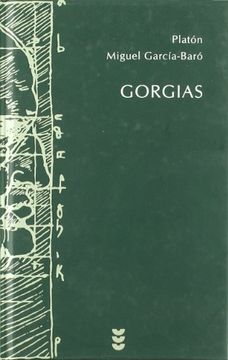
portada Gorgias: La paz es la Búsqueda de la Verdad (Hermeneia) (in Spanish)
Type
Physical Book
Year
2010
Language
Spanish
Pages
224
Format
Hardcover
ISBN
8430117539
ISBN13
9788430117536
Edited in
España
Edition No.

Gorgias: La paz es la Búsqueda de la Verdad (Hermeneia) (in Spanish)

Platón (Filósofo) (Author) · Distribuciones Agapea - Libros Urgentes · Hardcover

Gorgias: La paz es la Búsqueda de la Verdad (Hermeneia) (in Spanish) - Platón (Filósofo)

New Book Imported to Taiwan
Delivery: 24 Jul - 07 Aug Shipping: 8 to 13 business days.
NT$ 958
NT$ 958

Synopsis "Gorgias: La paz es la Búsqueda de la Verdad (Hermeneia) (in Spanish)"

Descripcion:14.25 x 21 cms.«HERMENEIA», nº 89El diálogo "Gorgias" fue escrito hacia 390 a.C., cuando Platón regresó a Atenas y fundó laDescripcion:14.25 x 21 cms.Encuadernacion:Cartone.«HERMENEIA», nº 89El diálogo "Gorgias" fue escrito hacia 390 a.C., cuando Platón regresó a Atenas y fundó la Academia. Puede considerarse uno de los primeros textos filosóficos, ya que plantea la confrontación entre socratismo y platonismo inicial.Al comienzo del diálogo, Sócrates sustituye los términos «guerra» y «batalla» por la palabra «fiesta». Tan sorprendente cambio expresa el contraste entre el método beligerante de la sofística y la búsqueda de la paz auténtica que la filosofía intenta lograr para el hombre.Hoy, cuando parecen haberse sepultado todos los sentidos y esperanzas de la civilización hasta ahora conocida, cuando se abre paso la impresión de estar asistiendo al crepúsculo de las divinidades concebidas por el hombre, también se vislumbra un ansia inmensa de renovar la realidad, de sentir y pensar con toda la intensidad el Enigma, el Amor y el Bien.ENGLISH:"Gorgias. A Translation and Commentary""Gorgias" was written after 390 B.C., when Plato returned to Athens and founded the Academy. This dialogue is an early evidence of the development of philosophy, as it shows the confrontation between the ideas defended by Socrates and the young Plato and all the other possibilities offered in Athens to get what we would call today a "higher education".At the beginning of the work Socrates changes the terms "war" and "battle" for the word "party". This surprising change reveals the contrast between the belligerent methods of sophists and the search for true peace, something that any genuine philosophy tries to offer to all.
Platón (Filósofo)
  (Author)
View Author's Page
Plato (Athens, ca. 427 BC – ca. 347 BC) was a Greek philosopher, a disciple of Socrates and teacher of Aristotle, whose work deeply influenced Western philosophy. He founded the Academy of Athens, one of the first educational institutions of the ancient world. His philosophical legacy is conveyed through dialogues, a literary genre in which he developed ideas about ethics, politics, epistemology, and metaphysics.

Among his most recognized works are Apology of Socrates, Crito, and The Symposium, all written approximately between 399 and 385 BC, in addition to The Republic and Phaedo. Through the character of Socrates, Plato explores themes that remain central in philosophical thought. His influence endures to this day, although he received no formal awards, given the historical context.
See more
See less

Customers reviews

Frequently Asked Questions about the Book

All books in our catalog are Original.
The book is written in Spanish.
The binding of this edition is Hardcover.

Questions and Answers about the Book

Do you have a question about the book? Login to be able to add your own question.

Opinions about Bookdelivery

More customer reviews