你好! Shipping to Taiwan with premium packaging for just NT$300 

Ship to
Taiwan
0
  • argentina
  • chile
  • colombia
  • españa
  • méxico
  • perú
  • estados unidos
  • internacional

Select your country

Americas

Europe

Rest of the world

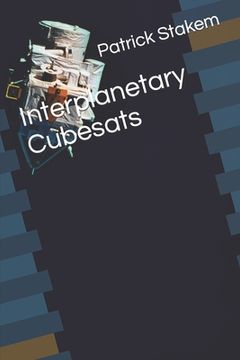
portada Interplanetary Cubesats
Type
Physical Book
Language
English
Pages
86
Format
Paperback
Dimensions
22.9x15.2x0.5 cm
Weight
0.14 kg.
ISBN13
9781520766171

Interplanetary Cubesats

Patrick Stakem (Author) · Independently Published · Paperback

Interplanetary Cubesats - Stakem, Patrick

New Book Imported to Taiwan
Delivery: 28 Sep - 09 Oct Shipping: 17 to 21 business days.
NT$ 720
NT$ 720

Synopsis "Interplanetary Cubesats"

This book discusses the application of Cubesats in the exploration of our solar systems. Including the Sun, the eight primary planets and Pluto, many moons, the asteroid belt, comets, and the ring systems of the four gas giants, there is a lot to explore. Although the planets (and Pluto) have been visited by spacecraft, Earth's moon has been somewhat explored, and many of the other planets' moons have been imaged, there is a lot of "filling in the blanks" to be done. Here we examine the application of swarms of small independent spacecraft to take on this role. Some of the enabling technology's for cooperating swarms is examined. Almost every Cubesat sent into space to this point has gone into Earth orbit, and is either there still, or has reentered the atmosphere. It's a big solar system, and there's a lot we don't know about it. Additionally, all Cubesats have launched as ride-along payloads. There are two approaches for using Cubesats for exploration away from Earth. One uses the demonstrated technology of solar sailing, and missions using this approach are being implemented. Another uses a large carrier-mothership, loaded with hundreds or Cubesats. This is sent to a destination. achieves orbit, and dispenses the Cubesats, providing a communications link with Earth. JPL is postulating this type of mission in the 2020's. They baseline a dormant cruise duration of 100-2200 days, followed by a Cubesat life of 1-7 days. Prior to that, the most likely scenario is a traditional exploration mission with some tag-along Cubesats. The next step beyond that is to make a swarm of Cubesats the primary payload.

Customers reviews

Frequently Asked Questions about the Book

All books in our catalog are Original.
The book is written in English.
The binding of this edition is Paperback.

Questions and Answers about the Book

Do you have a question about the book? Login to be able to add your own question.

Opinions about Bookdelivery

More customer reviews