Tracked shipping to Taiwan with premium packaging for just NT$300 

Ship to
Taiwan
0
  • argentina
  • chile
  • colombia
  • españa
  • méxico
  • perú
  • estados unidos
  • internacional

Select your country

Americas

Europe

Rest of the world

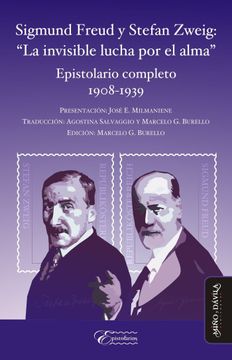
portada Sigmund Freud y Stefan Zweig: “la Invisible Lucha por el Alma”: Epistolario Completo 1908-1939 (in Spanish)
Type
Physical Book
Year
2016
Language
Spanish
Pages
112
Format
Paperback
ISBN13
9788416467334
Edited in
España
Edition No.
1

Sigmund Freud y Stefan Zweig: “la Invisible Lucha por el Alma”: Epistolario Completo 1908-1939 (in Spanish)

Sigmund Freud (Author) · Stefan Zweig (Author) · Miño Y Dávila Editores · Paperback

Sigmund Freud y Stefan Zweig: “la Invisible Lucha por el Alma”: Epistolario Completo 1908-1939 (in Spanish) - Sigmund Freud

New Book Imported to Taiwan
Delivery: 17 Jul - 29 Jul Shipping: 5 to 8 business days.
NT$ 852
NT$ 852

Synopsis "Sigmund Freud y Stefan Zweig: “la Invisible Lucha por el Alma”: Epistolario Completo 1908-1939 (in Spanish)"

El intercambio epistolar entre Freud y Zweig muestra al creador del psicoanálisis en la doble faceta de Dichter (creador de ficciones) y Naturforscher (científico naturalista). Sus cartas nos ofrecen un material inagotable para "poner a trabajar" las propias concepciones psicoanalíticas, en el proceso mismo de su producción. En su correspondencia, Freud relata las diversas vicisitudes que rodean su la vida - expresadas por el decir poético (Dichten) de un gran estilista de la lengua alemana-; así como también transmite con claridad el "pensamiento pensante" (Denken) acerca de los mecanismos del inconsciente. Freud consideraba a los artistas como capaces de un acceso privilegiado a la "otra escena" inconsciente (eine andere Schauplatz), de modo que la figura de un creador literario de la talla de Zweig operó como estímulo para la redacción de una correspondencia plena de reveladoras consideraciones psicoanalíticas. * * * * * * "Permítame decirle claramente lo que yo y muchos otros le agradecemos: el coraje en la psicología. Como innumerables hombres de la literatura de toda una época, usted, de manera individual, ha eliminado las inhibiciones. Gracias a usted vemos mucho, gracias a usted decimos mucho de lo que, de lo contrario, no se habría visto ni dicho nada. Esto aún no está claro hoy en día, porque a nuestra literatura no se la ve ni históricamente ni en sus formas causales; dentro de una década o dos se reconocerá cuál era el contexto que de repente dio una audacia psicológica distinta a Proust en Francia, a Lawrence y Joyce en Inglaterra, y a unos pocos alemanes. Será su nombre. Y ya no negaremos a este grandioso fundador." (Stefan Zweig a Sigmund Freud, 8/9/1926)Presentación por José E. Milmaniene Nota del editor por Marcelo G. Burello Stefan Zweig y Sigmund Freud: Epistolario completo Stefan Zweig: Palabras ante el féretro de Sigmund Freud
Sigmund Freud
  (Author)
View Author's Page
Sigmund Freud (1856-1939) was an Austrian neurologist and the founder of psychoanalysis. His work falls within the genre of psychology and philosophy of mind, revolutionizing the understanding of the unconscious. Among his most influential books are The Interpretation of Dreams (1899), Three Essays on the Theory of Sexuality (1905), and Civilization and Its Discontents (1930). He also wrote The Psychopathology of Everyday Life (1901) and Beyond the Pleasure Principle (1920), fundamental in the evolution of psychoanalytic thought.

Throughout his career, Freud developed key concepts such as the id, the ego, and the superego, in addition to the theory of the Oedipus complex. His ideas influenced multiple disciplines, from literature to modern psychiatry.
See more
See less
Stefan Zweig
  (Author)
View Author's Page
(Vienna, 1881 – Petrópolis, Brazil, 1942) a very popular writer, both as an essayist and biographer as well as a novelist, he was one of the most versatile writers of the first half of the 20th century. His narrative ability, skill, and delicacy in describing feelings and the elegance of his style make him a fascinating storyteller. He was associated with the great authors of his time: Rilke, Joseph Roth, Thomas Mann, H.G. Wells, Tagore, among others. After several decades in which his works were inexplicably ignored, Zweig has been rediscovered and currently enjoys the prestige and popularity that literary justice demanded.
See more
See less

Customers reviews

Frequently Asked Questions about the Book

All books in our catalog are Original.
The book is written in Spanish.
The binding of this edition is Paperback.

Questions and Answers about the Book

Do you have a question about the book? Login to be able to add your own question.

Opinions about Bookdelivery

More customer reviews