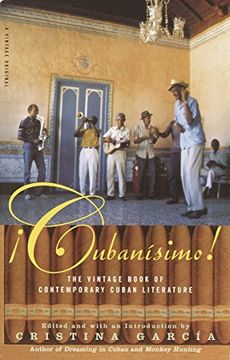
Cubanisimo! The Vintage Book of Contemporary Cuban Literature
Cristina García Rodero
Synopsis "Cubanisimo! The Vintage Book of Contemporary Cuban Literature "
¡Cubanísimo! is the first book to gather Cuban stories, essays, poems and novel excerpts in one volume that summarizes the richness and depth of a great national literature. From the turn of the century to the present, from Havana to Miami, New York, Mexico City, Madrid and beyond, the spirit and diversity of Cuban cultureconverge in one vibrant literary jam session. Cristina García has ingeniously grouped her selections according to “the music of their sentences” into five sections named for Cuban dance styles. ¡Cubanísimo! begins with an elegant classical danzón section that includes poems and diaries from the father of Cuban literature, José Martí, and Antonio Benítez-Rojo’s hallucinatory story A View from the Mangrove. As it moves to more contemporary dances, the book offers, among other delights, the essay by Alejo Carpentier that was the first to define magical realism; the scandalously sensual eighth chapter from José Lezama Lima’s controversial 1966 novel Paradiso; Ana Menendez’s Little Havana-inspired story, In Cuba I was a German Shepherd; a passage from Reinaldo Arenas’s acclaimed memoir Before Night Falls and six witty musings—or mambos—on language from Gustavo Pérez Firmat’s Life on the Hyphen.A brilliant introduction for readers who want to explore Cuban literature, as well as a collectible volume for those who love Cuba, ¡Cubanísimo! is a celebration of Cuban culture, from the island to its farthest flung voices.
Cristina García Rodero (nacida en Puertollano, Ciudad Real, en 1949) es una de las fotógrafas españolas más reconocidas internacionalmente. Se formó en Bellas Artes en la Universidad Complutense de Madrid, inicialmente con pintura, aunque pronto su trayectoria se orientó hacia la fotografía documental y de reportaje. Su enfoque principal se centró en capturar costumbres, festividades, rituales y tradiciones populares tanto en España como en diversos países del mundo.
Su obra pionera, entre las más célebres, es el libro España Oculta (1989), resultado de años de trabajo sobre las fiestas y ritos populares de la España rural y que la lanzó a la primera plana del reconocimiento artístico. Posteriormente amplió su interés hacia tradiciones en lugares como Haití, India o Etiopía, siempre desde una mirada profundamente humana, sensible y respetuosa.
García Rodero se distingue por una mirada que conjuga lo estético con lo antropológico: sus imágenes no solo documentan, sino que transmiten emoción, memoria e identidad colectiva. Fue la primera fotógrafa española en formar parte de la agencia Magnum Photos (a partir de 2005, miembro pleno en 2009), lo que subraya su relevancia en el ámbito internacional.
Ha recibido numerosos premios y distinciones a lo largo de su carrera, como el Premio Nacional de Fotografía de España (1996) y la Medalla de Oro al Mérito en las Bellas Artes (2005). Su legado ha sido clave en la evolución de la fotografía documental en España, influyendo a generaciones nuevas de artistas visuales.