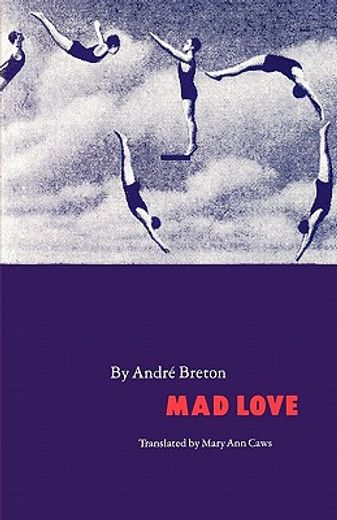
Mad Love has been acknowledged an undisputed classic of the surrealist movement since its first publication in France in 1937. Its adulation of love as both mystery and revelation places it in the most abiding of literary traditions, but its stormy history and technical difficulty have prevented it from being translated into English until now. "There has never been any forbidden fruit. Only temptation is divine," writes André Breton, leader of the surrealists in Paris in the 1920s and '30s. Mad Love is dedicated to defying "the widespread opinion that love wears out, like the diamond, in its own dust." Celebrating breton's own love and lover, the book unveils the marvelous in everyday encounters and the hidden depths of ordinary things. "Translator Caws provides a masterly introduction and annotation," wrote the reviewer for the Library Journal. Mary Ann Caws, Distinguished Professor of French, English, and Comparative Literature at Hunter College and the Graduate School of the City University of New York, is the author or translator of more than twenty books.
André Breton fue un escritor, poeta y ensayista francés considerado el principal fundador y teórico del surrealismo. Nacido en 1896 en Tinchebray, Francia, estudió medicina y trabajó en hospitales psiquiátricos durante la Primera Guerra Mundial, experiencia que despertó su interés por el inconsciente, los sueños y las teorías de Sigmund Freud. Tras vincularse inicialmente al dadaísmo, Breton impulsó el movimiento surrealista en la década de 1920 mediante manifiestos, revistas y experimentos de escritura automática. Su influencia trascendió la literatura y alcanzó la pintura, el cine y la filosofía, convirtiéndose en una figura central de las vanguardias europeas. Básicamente, si el surrealismo tuvo un director técnico, Breton llevaba el silbato y probablemente también un pez flotando sobre la cabeza.
Entre sus obras más importantes se encuentran Nadja, Los vasos comunicantes, El amor loco y El arte mágico, ensayo donde reflexiona sobre la relación entre creación artística, simbolismo y pensamiento mágico a lo largo de distintas culturas y períodos históricos. Breton defendía el arte como una vía de liberación mental y transformación de la realidad, alejándose de las restricciones racionalistas tradicionales. Aunque su personalidad generó tensiones dentro del propio movimiento surrealista, su papel como impulsor intelectual y organizador fue decisivo para consolidar una de las corrientes artísticas más influyentes del siglo XX.